Minnesota summers can give you the ideal conditions for enjoying your backyard swimming pool while Minnesota winters decidedly cannot. This means that your pool is closed throughout the cold months and when warm weather returns it’s time to open it up and enjoy it once again. But, how do you know when to open your pool in Minnesota?
As a Minnesota homeowner you know that Spring is an unpredictable season, which can make knowing when to open your in-ground pool not as straightforward as you may want. What conditions should you be looking for to open your pool for the season? And, as your pool has been covered for months, are there steps you should take to avoid problems? Are there measures you should be taking during the winter months to make opening your pool easier?
Let’s look at the signals that will help you know when to open your pool post-winter and guide you through the steps you can take to avoid a messy start, like algae, cloudy water, stains, and filter drama.
Unpredictable weather extremes may just be the truest thing that can be said about Minnesota. That and the fact that the calendar does not predict when warm weather consistently returns to the north country. In other words, Spring can be a slow and messy season. Which means that just like knowing when to safely close your pool in the fall can be unpredictable in Minnesota, so too can opening it.
With this in mind, know that there is no date that will arrive that will tell you to open your pool. Instead, there are conditions that need to be in place that will tell you when to do so.
When determining your pool startup after winter, there are three triggers that matter most:
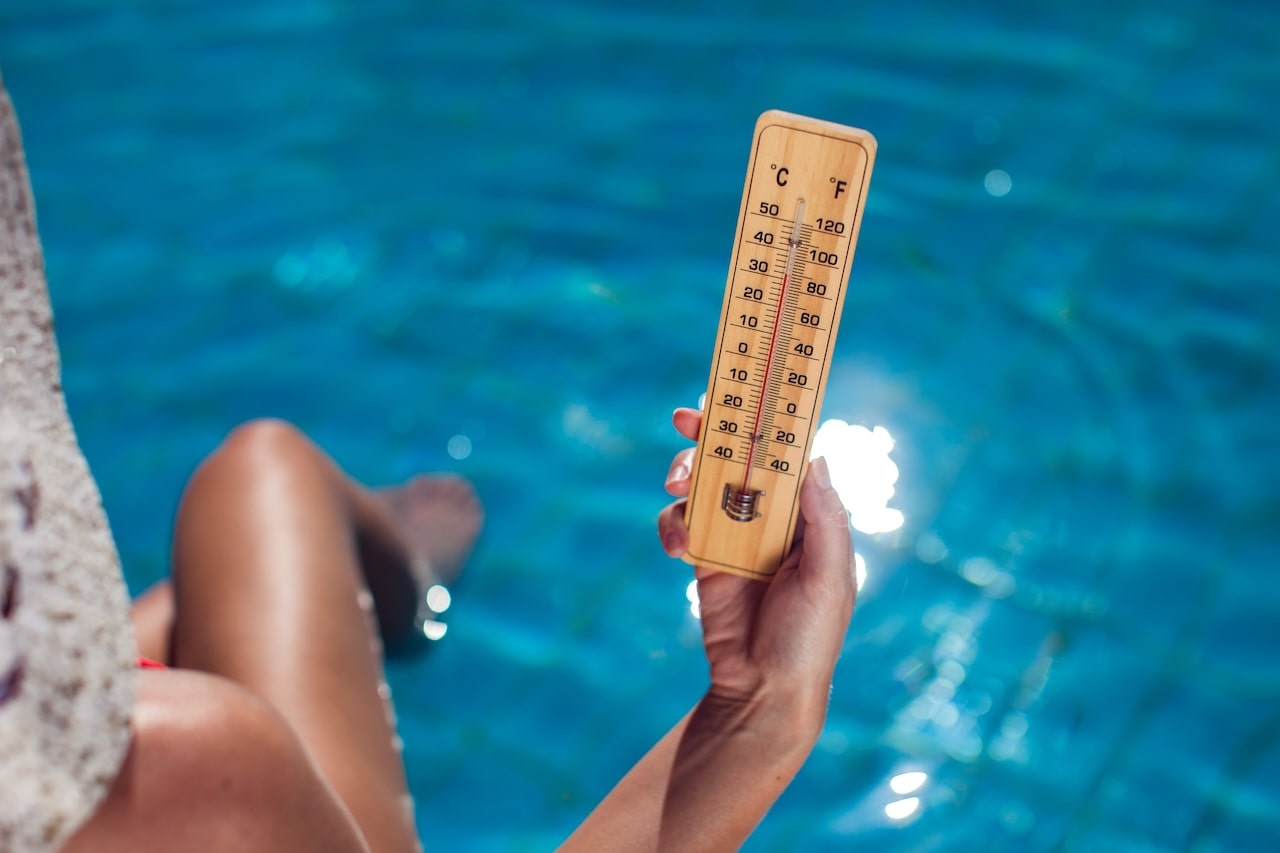
Looking at the water temperature trend can give you a window for opening your pool that will help prevent algae growth. In the Spring the water temperature will rapidly rise during April and May between 40 degrees Fahrenheit to 60 and above. Algae growth can be prevented by opening your pool when the water temp trend is between 50 to 60 degrees. This typically occurs between late-April and mid-May.
Remember that air temperature can be high while the water temperature still remains cold, which makes this measurement more reliable than air temp alone.
As you know, daytime temperatures during a typical Minnesota Spring can climb into the 70’s or even 80’s, but that does not mean that the overnight temperatures do not drop, sometimes even below freezing (32 degrees Fahrenheit).
These extreme fluctuations mean you cannot depend on daytime temps alone, but rather when overnight lows regularly remain above that freezing mark. Opening too early can risk freezing damage to your equipment, while opening too late can risk an algae bloom.
Winter can do a number on your pool cover. A collection of decomposing leaves, twigs, and insects, muddy sludge, and stagnant water is common. The longer you wait to remove the mess the more time the mess has to accumulate and as it warms up, gets even messier. Maintaining your pool cover over the winter with periodic checks, occasional clearing, and installing a leaf mesh can help lessen the mess come spring.
So, what is a realistic timeframe that you can plan to open your pool? The answer, again, is not that straightforward as it can vary depending on a few factors:
Heated pools can open earlier than unheated pools, usually by several weeks. Heated pools can typically open in early to mid-April while waiting until late-April to mid-May is a better timeframe for unheated pools. Opening an unheated pool too early risks wasting chemicals on water that is too cold.
The type of pool cover you have can shift the timing of your pool opening. This is due to the connection between your pool cover and the promotion of algae growth.
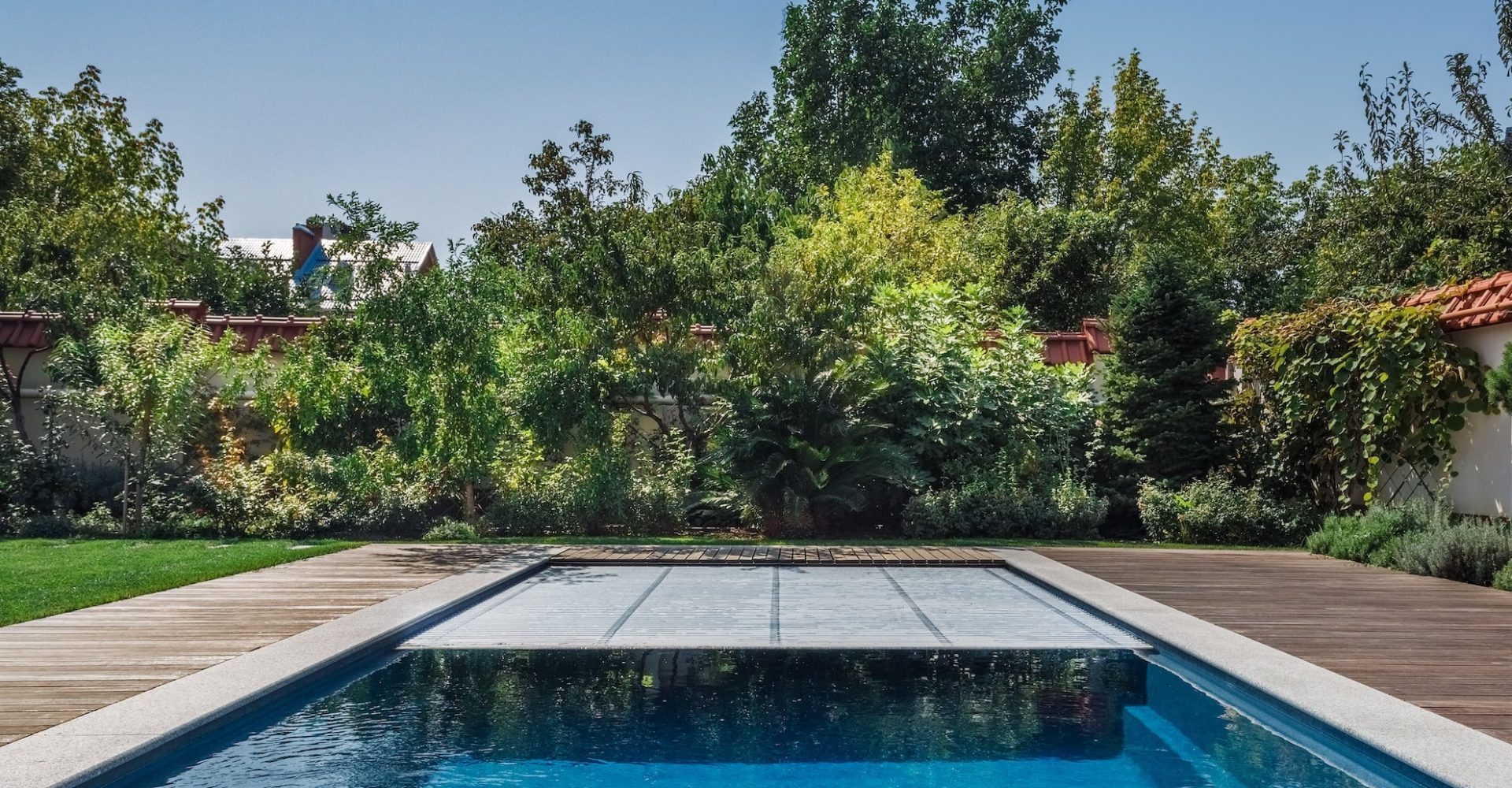
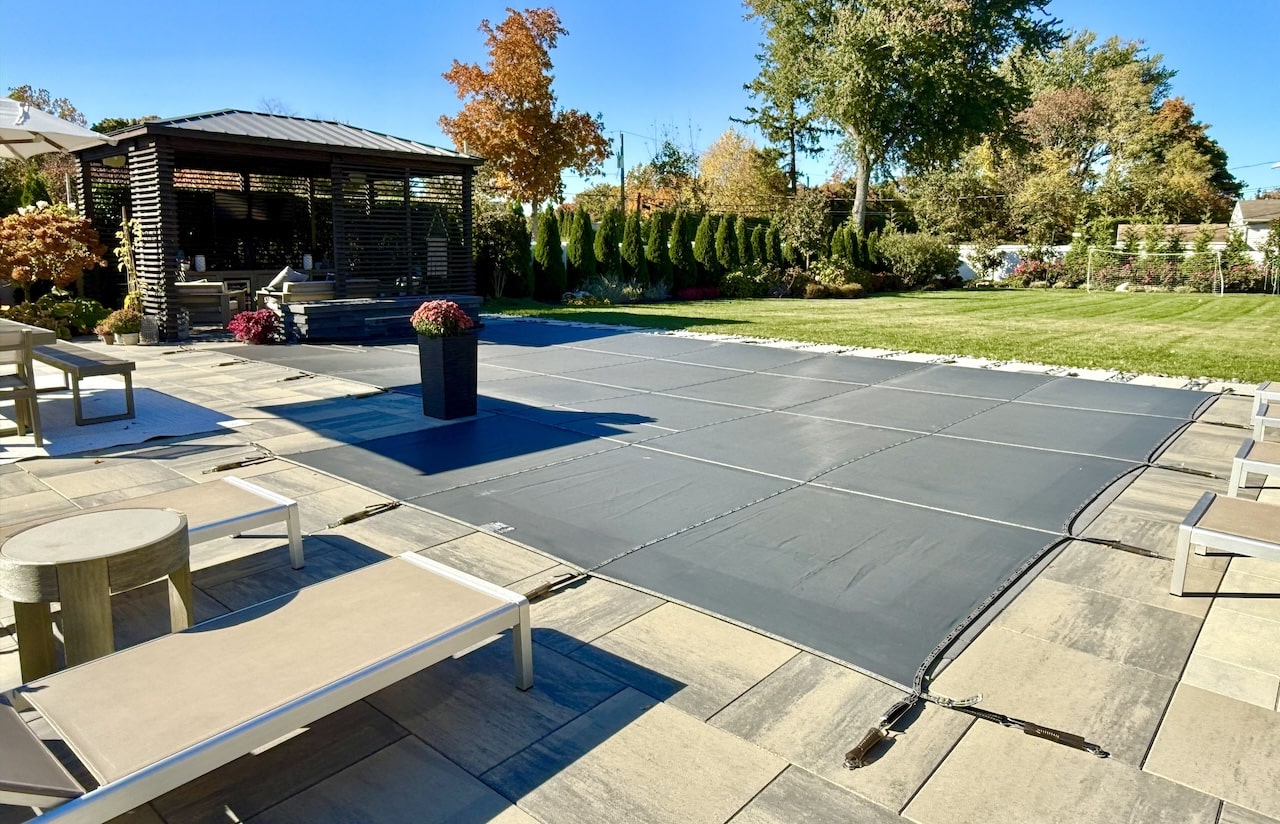
A mesh pool cover allows in sunlight and fine debris, which makes it much more likely to promote algae growth as temperatures warm. An opaque or solid cover protects the water and keeps it cleaner, which cuts down on algae growth.
With a mesh cover an earlier opening in mid to late April can help you avoid a swampy mess. A solid cover can allow for a later opening.
Both of these conditions can cause excessive debris, such as leaves, twigs, dirt, and pollen to collect on your pool cover. Heavy accumulation can cause damage, such as clogged filters, green water, and punctured or stained liners. Opening your pool earlier rather than later can help avoid excessive debris accumulation.
Also, if you see certain conditions it is best to open your pool sooner rather than later, including:
If you are dreaming about entertaining around your pool in the heat of summer even though it is the dead of winter, there are things you can do in those cold months that will make your spring opening easier.
Winter is an ideal time to order and restock your supplies before the weather turns warm. This includes test kit refills, filter media, O-rings, and plugs. You can also check your cover anchors and put a plan in place to control your meltwater.
If you are using a pro to inspect, maintain, or open your pool winter is also a great time to book for these services. You can imagine that spring schedules for these services fill up fast. Waiting to book can delay your opening and pool enjoyment.
Knowing how to open a pool after winter can help you avoid a gross start to your pool enjoyment. Let’s take a look at some spring pool opening tips that can help you steer clear of common mistakes and get your pool up and running without chaos or damage.
Your pool cover is on top of the list for protecting your pool from extreme weather, but one thing about putting a pool cover on in fall, is that you have to then remove a pool cover in spring. This does not happen without a few precautions that will help you avoid dumping gunk into your pool.
Once your cover is removed, skim, net, and vacuum your pool before you flip any switches. Then, reconnect your equipment and inspect for visible issues. Once that is done you can fill your pool to the proper level, prime it and start the circulation.
Getting your pool water chemistry opening right can make a big difference throughout the summer. Test your water and then adjust if needed in a sensible order. This includes brushing and cleaning your filter and running it long enough to stabilize.
Some common pool start-up mistakes to watch out for include:
No one wants a gross start to their pool season, but there are some basic steps you can take to avoid it.
It may go against your instinct to open your pool early in Minnesota, but it can pay off in the long run by preventing green algae growth, cutting down on the need for excessive chemical treatments to balance the water, and allows your filtration system to work through spring pollen, which prevents slime from forming.
Opening earlier also gives you time to make any repairs if you find that something is damaged or broken. All of this ensures that your pool is clean and ready to go when the warmer days arrive for peak swimming season.
Once temperatures rise debris management becomes more important to prevent algae growth. Keep to a daily schedule of skimming and weekly vacuuming and brushing to control debris build-up.
Also keep your water moving by running your pump for extended periods and also maintain your pool’s chemical balance, testing 2 or 3 times a week. Using a cover while the pool is not in use can also help manage debris.
This routine can help clear water faster and prevent algae when opening pool after a long winter. The focus of this first week should be:
When you first open your pool conduct a thorough cleaning of your cover before you remove it. Then, prepare your equipment by reinstalling your drain plugs and finally fill the water level to hit in the middle of your skimmer. Also remember to clean your filter.
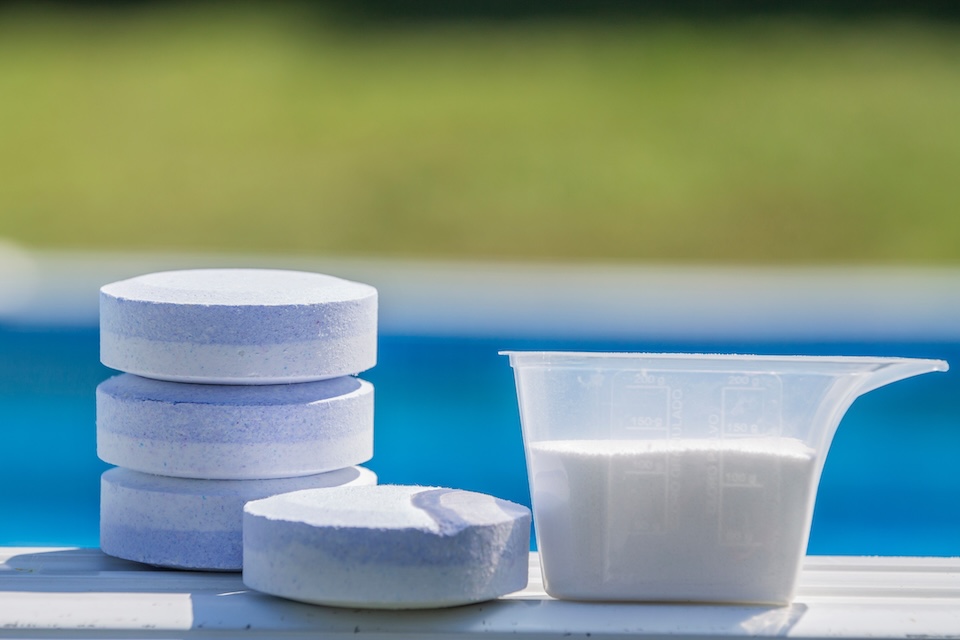
During this time, also test and balance your water for pH, alkalinity, and chlorine levels. You then will want to shock the pool with a heavy dose of chemicals to kill bacteria and algae.
After opening your pool, also run your pump 24/7 for a few days. This helps circulate the chemicals and filter the water. Skim, vacuum, and brush your pool daily during this first week to continue to minimize debris and keep your water clean.
If you are experiencing cloudy water, make sure to follow in order a few simple steps. You should filter first, which can take care of the problem quickly. If that doesn’t take care of the issue, think of your chemistry second and be methodical about how you are changing that chemistry and how it affects your pool water. Finally, be patient. Sometimes, your pool just needs a little time to get going. This patience is often necessary to help reduce your chlorine usage.
When experiencing cloudy water, you also need to understand the basic distinction between green from algae and green from metals. Algae will make your pool look murky or cloudy while metals can turn your water a translucent greenish blue.
Pool experts are not only there for your pool install, they can also help you properly maintain your pool. They can be especially useful in catching problems early, sometimes with easy fixes, that can bring you both peace of mind and lower pool maintenance costs.
Call in a pro if:
Pros can also help you find the right pool maintenance system for a cleaner and safer pool that you can enjoy for years to come.
Even if spring is running late, your pool should be open by mid-May to early June to avoid algae growth. Earlier opening can avoid causing a swamp effect.
Freezing temperatures can damage your pool equipment, but it is also better to open a little early than a little late to prevent a swampy, gross start.
The main issue with a late freeze is that water stuck in your pipes or equipment can expand and cause damage. To prevent this, keep your pool running. The continuous circulation protects against freezing. You can also cover it for insulation.
Typically, about 2 to 5 days and up to a week if algae-infested.
Yes, to help remove contaminates, algae, and bacteria that may have built up over winter.
Check your pump, filter, heater, skimmer baskets, valves, liner, safety covers, and handrails and ladders. Replace any damaged or broken parts.
Saltwater pools open about the same as chlorine pools, except for a few added steps that include adding salt and managing the salt cell. You should also check the generator for any buildup before you activate it.
Knowing when to open your pool can be tricky, especially for first-time pool owners. If you need help opening your pool or have questions about opening it properly, contact the pool experts at Tracer Pool & Landscape to help you get a good start to your pool season. Make sure you book an appointment early and avoid the Spring algae scramble.