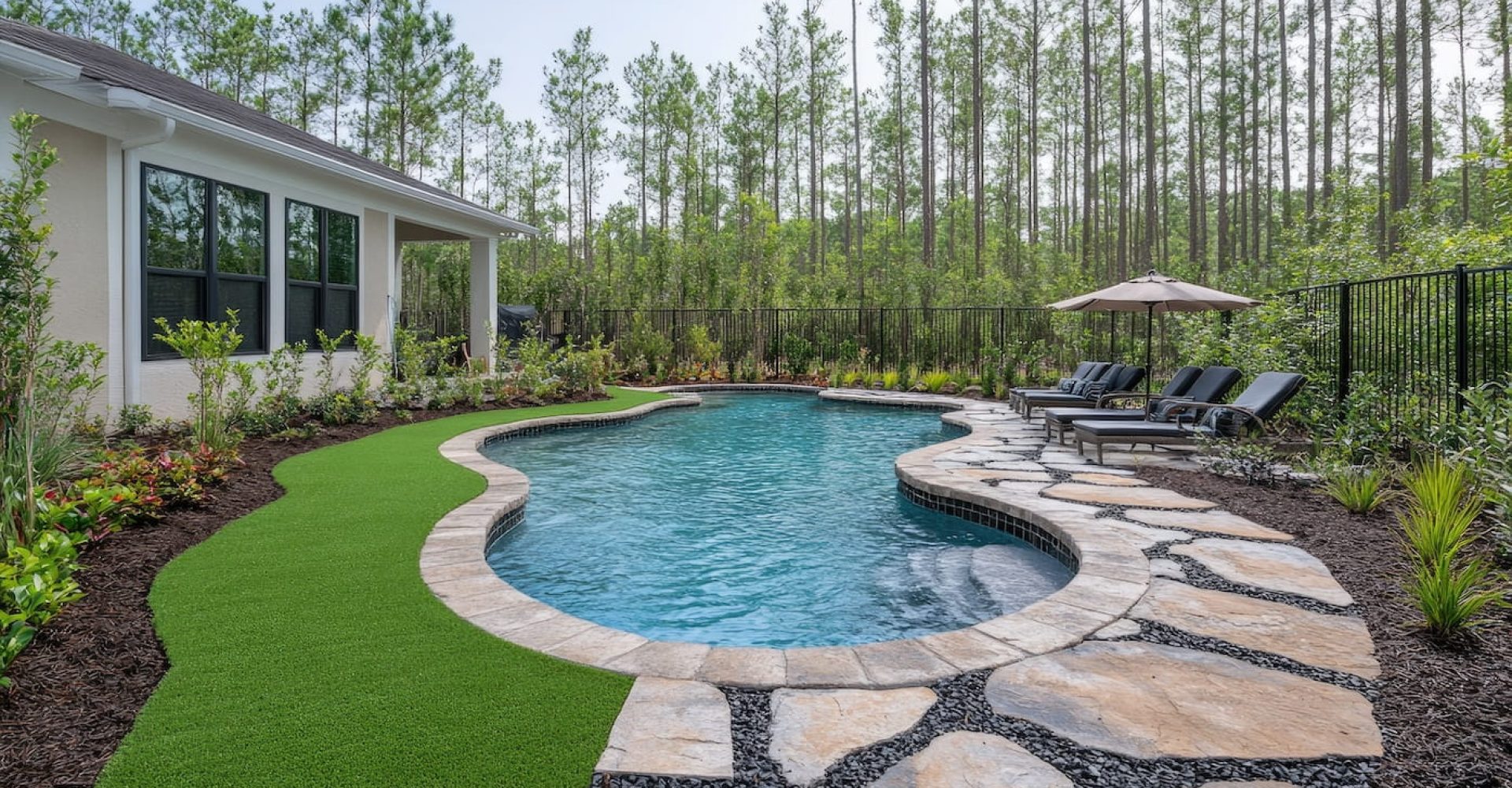
Many people choose poolside trees based on appearance alone or the level of shade they provide, and then regret the mess, roots, or constant cleanup their tree choice generates. Let’s guide you through the best trees to plant near pools, so you can get the added beauty and shade without turning your pool area into a daily chore.
Trees are not meant to be temporary planting choices. They are meant to be permanent living features in your backyard design. When you have a pool, your tree choice can also affect your pool’s function and maintenance, so choosing the right type of tree matters. There are a few basic risks for your pool when it comes to tree choice.
It stands to reason that tree roots are drawn to water, and if they make their way into your plumbing or under your pool deck or into cracks in your cement, they can wreak havoc that can end up costing plenty in repairs. The more aggressive the growth patterns of a specific tree’s root system, the higher the risk of damage.
Planting trees that shed leaves excessively, especially those that lose leaves more easily throughout the summer with strong winds or storms, runs a greater chance of having your skimmer, pump, or filter clogged. Decomposing leaves can also stain your pool deck, discolor your water, or upset your pool’s pH balance, causing algae growth.
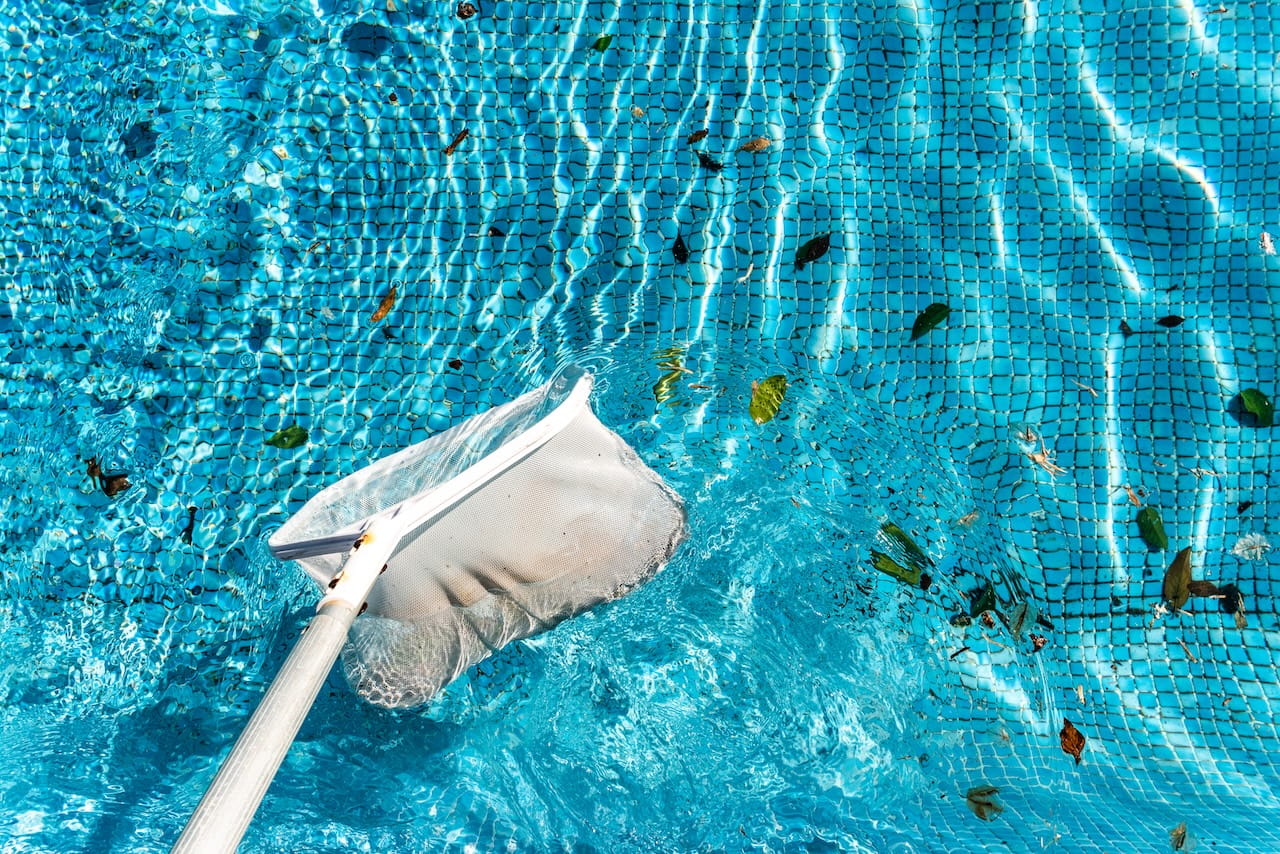
It’s a good idea to choose trees that will not damage pool decks, which means staying away from those that produce fruit, pods, or sticky debris that can stain your pool deck material or make it difficult to clean.
Trees that more easily lose limbs or branches when exposed to strong winds, storms, or other weather conditions can increase your risk of pool shell or liner damage from punctures, scratches, or cracking. Tree branch debris can also clog pool plumbing, stain decks, or promote algae growth.
Attracting pests to your pool is not desirable, which means staying away from trees that create especially inviting environments for pests, such as fruit or flowering trees that provide a steady source of food or dense canopies that become prime shelter for birds and squirrels.
Although you do not want your pool area to be exposed to constant sunrays, you also do not want constant shade. Lower sun exposure can uncomfortably reduce water temperatures and lower the natural sanitation that the sun provides.
Overall, you want to choose a tree not just because it looks nice in springtime, but one that is not going to annoy you for the next ten to twenty years by increasing your pool maintenance and repair costs.
Red flags when picking poolside trees include:
The best pool landscaping trees possess certain traits and growth habits that do not create more cleaning and maintenance or have the potential to damage your pool system.
Trees with non-aggressive roots will reduce the risk of thick roots interfering with your pool system.
Trees with shallow litter will reduce the risk of debris getting into your pool water and help keep maintenance efforts manageable.
Trees grow. So, make sure you understand what your tree will look like as it matures. Know that it will be manageable as it grows bigger.
Trees that are naturally resistant to wind will not lose leaves, branches, or limbs easily, resulting in a cleaner pool area and less clean up.
Picking trees that naturally grow in your climate will most likely also be stronger and healthier, making them less likely to require high maintenance for growth or create conditions in your pool that require more maintenance.
Trees can provide natural privacy for your backyard and around your pool area, but some trees are better at creating privacy than others. Look for trees that have growth patterns that promote these conditions.
Think also about what your trees will look like in your backyard area throughout the different seasons. Try to choose ones that will provide structure year-round.
Overall, when choosing what trees to plant around a pool, think long term and not just buying what happens to look good at the nursery on a given day. It takes planning and consideration to find the best trees for backyard pools.

The best trees for pool privacy may not be those with the thickest canopy, but rather a growth pattern that is consistently distributed in a column structure. Some of the best privacy trees for pools include arborvitae, holly, or cypress. Planting evergreen trees near pools can also be good choices for privacy.
The best small trees for pool areas have compact growth patterns with low-mess and non-invasive features, such as Japanese maples, myrtles, or spruce.
Of course, evergreens are going to add structure to your yard year-round, but you can also consider trees with interesting branch shapes or colorful bark. These can include cedar, arborvitae, spruce, river birch, or white pine.
Choosing trees that have non-invasive root systems, no fruit or blossoms and do not easily lose limbs or foliage are the best options for cleaner pool areas. Some low-mess trees for pools include arborvitae, flowering cherry, buckthorn and narrow evergreens.
Everyone likes a big, showy tree. They can certainly produce a design statement, but tree roots and pool damage are real. So, choosing a tree with decorative impact without oversized roots is important. Non-invasive root trees include the eastern redbud, Japanese maple, serviceberry, and once again, arborvitae.
These recommendations are based on the best trees for a colder, northern climate, like Minnesota, but other climates will offer up different tree varieties. Your choice will also depend on your yard’s spacing and overall design.
| Tree type | Why homeowners like it | Watch-outs | Best use near a pool |
|---|---|---|---|
| Upright evergreen tree | Privacy and year-round screening | Can get dense if crowded | Fence lines and side-yard screening |
| Small ornamental tree | Visual interest and scale | Some drop flowers or seeds | Accent planting away from coping |
| Columnar tree | Vertical privacy in tight yards | Needs correct spacing | Narrow lots |
| Multi-stem ornamental | Softens hardscape | Needs cleanup if bloom-heavy | Seating zones, not right over water |
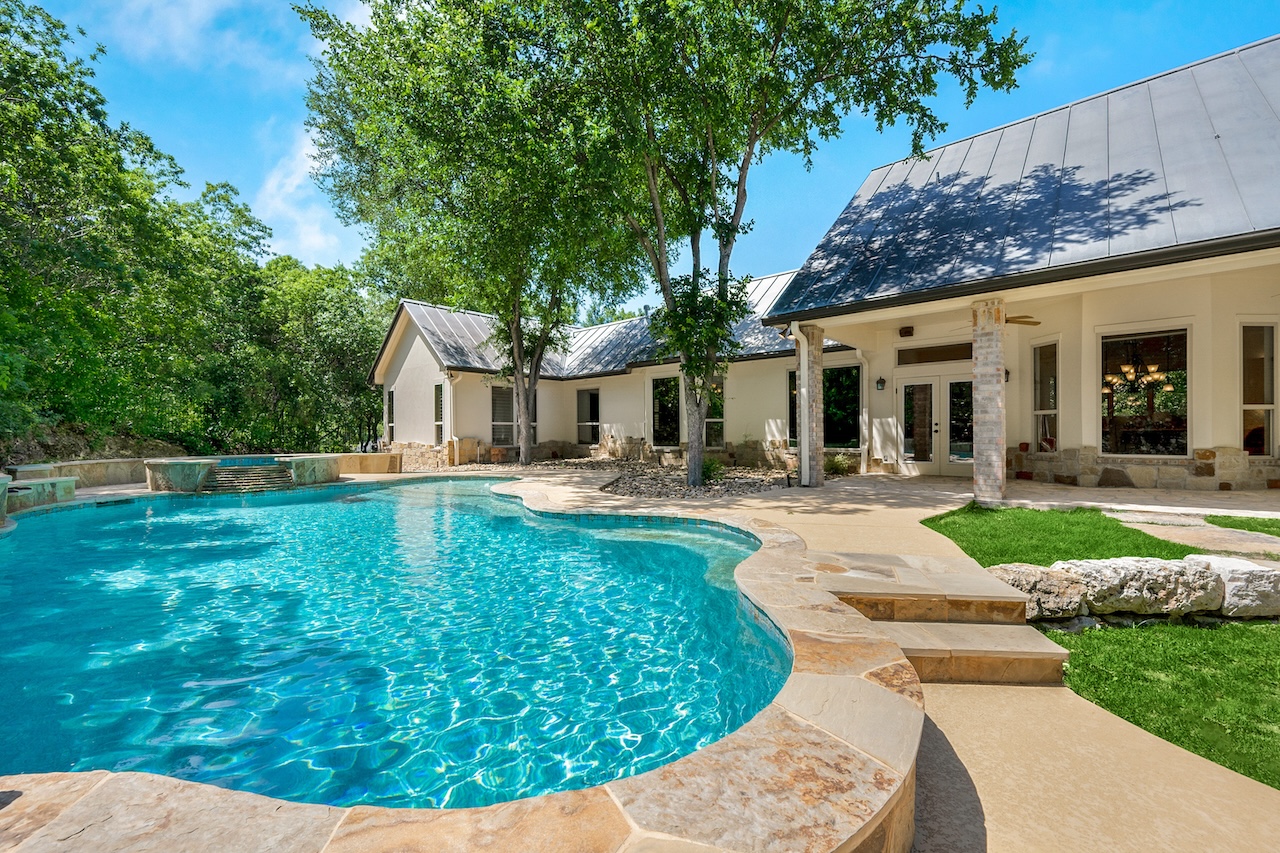
When planting trees near pools, it is important to figure out how far from the pool you should initially plant the trees you choose. Your spacing will depend on the mature size of the tree and its potential root spread, so you need to visualize tree growth and not what you see in the nursery. Research and expert advice can help you make the right choice for your yard.
Your pool deck material is also a consideration as different materials require different maintenance regimes, and what might stain or damage one type of material will not be an issue with another type.
Trees grow both above and below ground, so an understanding of your underground utilities and drainage layout will also help you weigh your tree planting options. Make sure you know what is under your yard as much as what is on it and how a tree’s undergrowth will affect that structure.
As far as above ground layouts go, your tree plan needs to also integrate with fence lines and neighboring properties. Try to envision how a tree will affect these structures and layouts.
Privacy around your pool area is often a top consideration for homeowners, trees can play a big part in providing it. You want to focus on screening trees and structured planting plans so you can balance between privacy, airflow, sunlight, and cleanup considerations. Trees and shrubs can provide visual softness around your yard’s hardscape elements, but you want to make choices that contribute to your overall backyard design and maintenance comfort.
Knowing what types of trees to avoid when choosing the best trees to plant near pools can help you narrow down your choices and concentrate on what is possible instead of what is not. Trees to avoid include:
| Problem | Usually caused by | Better planning move |
|---|---|---|
| Debris in water | Heavy leaf or flower drop | Choose cleaner species farther back |
| Deck movement risk | Poor spacing and root pressure | Plan around mature root zone |
| Too much shade | Oversized canopy | Use filtered or offset shade |
| Constant skimming | Trees planted right at the waterline | Pull planting beds farther from coping |
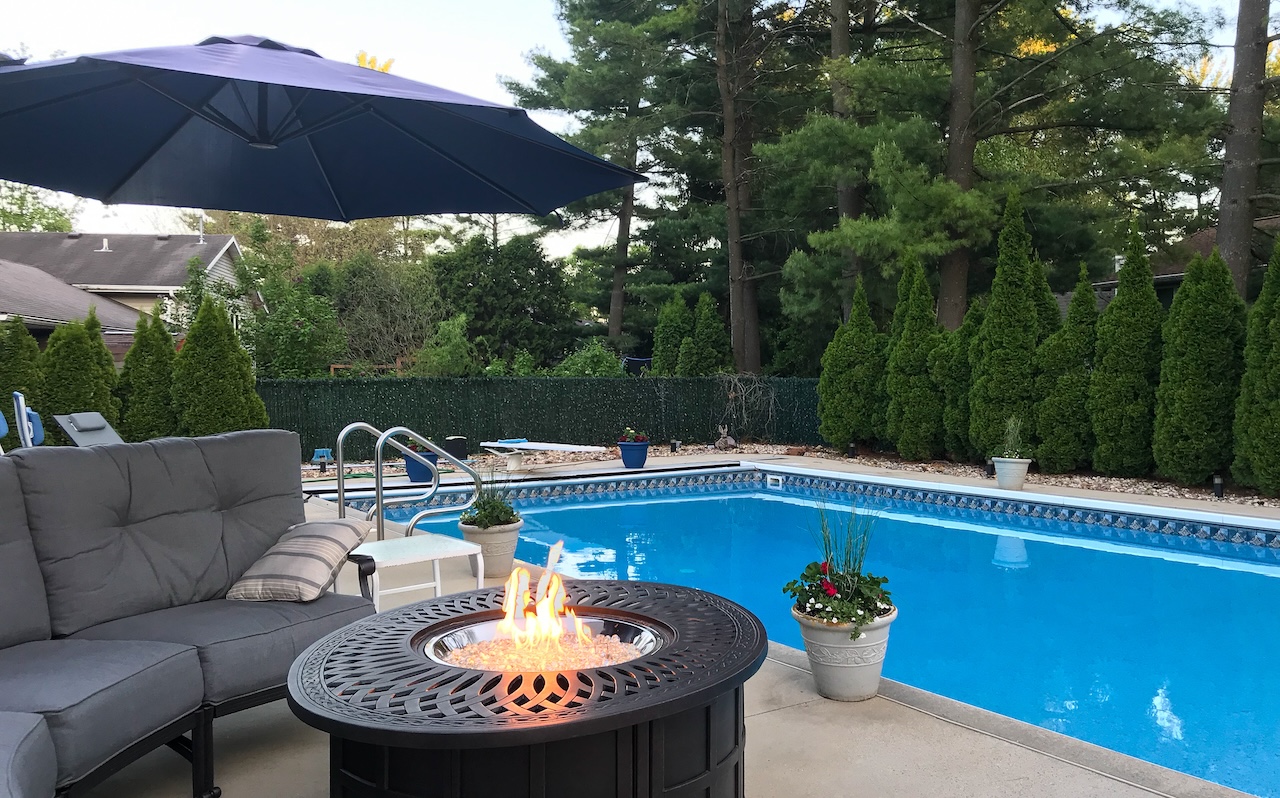
Pool landscaping ideas include an array of options and pool trees can work with many different areas within your design. A full backyard design will incorporate patio and lounge areas, fencing, and planting beds along with proper drainage considerations. Make sure you also consider lighting, which can add to both atmosphere and safety. And, of course, also consider what the sightlines from your house into your yard will look like. You want to look into your backyard from your house and be pleased with what you see. Tracer Pool and Landscape can help you incorporate all of these elements into a full backyard design that will fit both the function and style of your home.
Although you may not need to work with a pool and landscape contractor to plant trees near your pool, it is a good idea for some homeowners depending on your situation.
Pool area planting ideas are sometimes easiest to incorporate when you are first planning your new pool. A contractor who specializes in both pool installation and landscaping can help you create an integrated look that fits your backyard design.
Privacy is a prime reason for landscaping, but often homeowners do not envision mixed designs that can add variety and visual interest and end up with a boxed-in look, which can provide privacy without style. A professional landscaper will give you privacy options that will integrate with the shape, size, and style of your yard in ways you may not achieve on your own.
If you strive for low-maintenance pool landscaping and feel overwhelmed by the selection process, a professional contractor can help you narrow down your choices and find the right fit between manageable upkeep and your aesthetic style.
Poolside landscaping plants can help with your transition areas to create a more overall cohesive design throughout your backyard. A contractor can help you incorporate the greenery in a way that achieves this goal.
Contact the experts at Tracer Pool and Landscape for backyard pool tree ideas and a full-site plan.