Minnesota winters are no joke. Heavy snows, ground freeze/thaw cycles, and tough weather conditions take a toll on your pool even when it’s sitting idle. Following a Minnesota winter pool checklist ensures your pool survives the season with minimal issues, and specifically, using the right winter pool cover keeps your pool and deck safe and secure while setting you up for easier spring maintenance.
In this article, we’ll guide you through the best winter pool covers in Minnesota to prevent snow, ice, and wind damage to your pool structure.
Not all winter pool covers are made the same. Picking the best winter pool cover for Minnesota depends on your pool design and conditions. Here’s a breakdown of the most common types, including mesh vs solid safety cover winter options and hybrid models.
Mesh safety covers are lightweight, strong, and porous. They allow water to pass through while filtering out debris, insects, leaves, and twigs. Their drainage aspect is key in winter since water that pools on top of a cover will freeze, stretch it, and can risk tearing.
Pros:
Cons:
Mesh winter covers are great for exposed pools that get heavy snow but not as much debris.
Solid covers have zero drainage, meaning they prevent all sunlight and debris from reaching the pool water. While great for algae prevention, solid covers are heavier and water must be pumped off in winter to avoid sagging and ice damage, especially when managing winter pool safety cover snow load.
Pros:
Cons:
For more information on using pumps and freeze-thaw pool cover care, check out Tracer Pool & Landscape’s Pool Maintenance section.
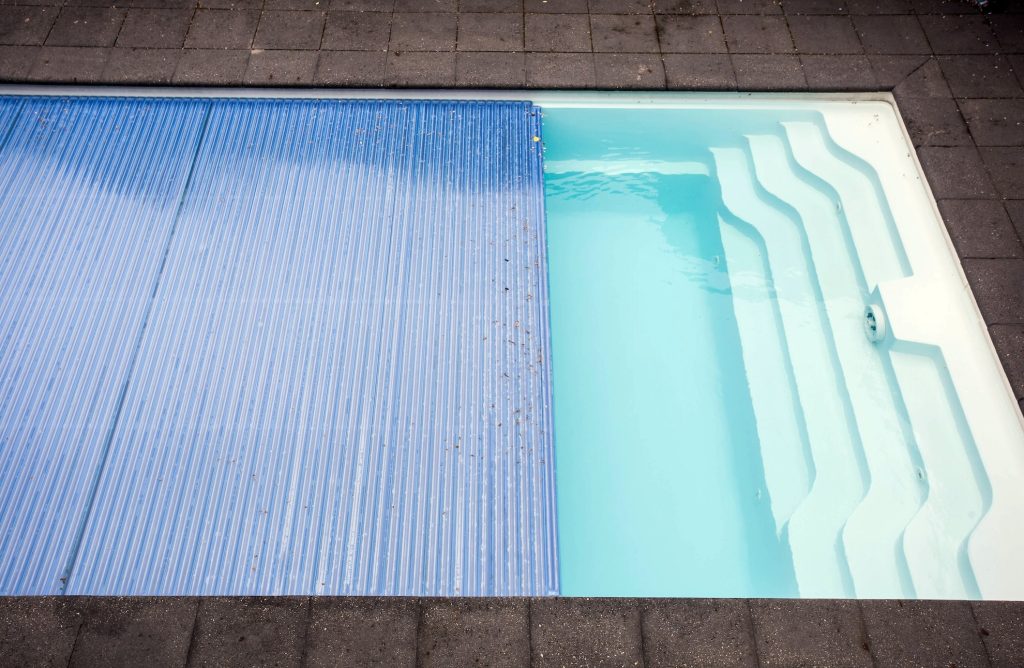
Hybrid covers use a mix of mesh and solid panels. Placement of hybrid covers is key – use the solid panel in debris-heavy areas or full sun, and use the mesh panel where better drainage is needed. Hybrid covers are a good compromise if your pool has partial shade, trees nearby, or uneven snowfall.
Benefits:
No matter the winter cover, you’ll still see leaves, pine needles, twigs, and other larger debris in your pool in spring. A leaf net for winter is a mesh panel you lay over the winter cover and is easy to remove in spring, allowing you to quickly scoop out debris, water, and ice. Leaf nets are highly recommended for Minnesota yards with lots of trees.
For other winter cover pros and cons, including energy and heat retention and what materials are best, check out Tracer Pool & Landscape’s ultimate guide to winter pool covers.

When your mesh cover is sagging under heavy snow, use a soft-bristled brush to gently redistribute the snow. Be careful not to use sharp or pointy objects that can puncture the cover fabric. With solid covers, too much snow can overstress cover anchors and stitching, so remove snow from pool cover gently and often.
Solid covers collect water that freezes and adds weight. A winter pool cover pump removes standing water to prevent damage to your cover and the pool structure. Solid covers almost always require a winter pool cover pump.
Never chop ice on a pool cover with an axe or shovel. Tools with sharp edges can puncture the fabric and damage anchors and stitching. Instead, melt ice on the cover with warm water or wait for it to melt naturally, then use the winter pool cover pump to remove standing water.
Strong Minnesota winds are another hazard, lifting off covers that aren’t tensioned and anchored well. Check straps for wear and tear and safety cover anchor tension monthly. Adjust tension on straps or anchors if the cover appears to sag. If your pool is in a very exposed area, consider a wind kit or extra tie-downs.
Doing a few checks each month will help you avoid big headaches when you open your pool in spring.
If the cover is sagging or you see large dips, visually inspect anchors for tightness. Adjust anchors and reposition straps to evenly tension the cover.
The water level beneath the winter pool cover helps support its weight against snow. If too low, the cover has to support everything, and if too high it can overflow in freezing temperatures.
For solid covers, confirm that the cover pump is in working order and the hoses aren’t kinked or frozen. Remove any ice or debris from the pump basin to ensure it operates properly.
Do a quick walk around the pool perimeter, looking for sticks, rocks, or other debris that could puncture your cover. Trim any branches that could fall on the cover during a big snowstorm.
For more monthly maintenance ideas, visit Tracer Pool & Landscape’s Pool Maintenance Hub.
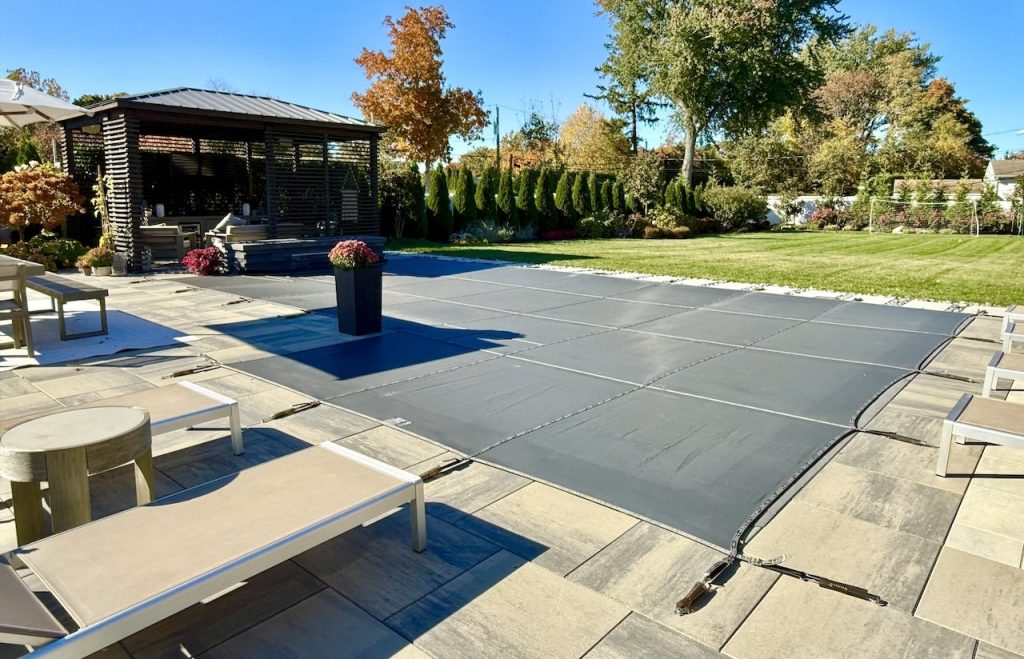
Pools face different challenges when winterized. Select the best winter pool cover by considering these factors.
Cover quality is key. Look for strong stitching, UV resistance, and a manufacturer’s warranty. Solid or hybrid covers are an investment, but a well-made one will last 8-12 years with care.
If you’ve experienced repeated snow-load, algae, or spring debris issues, a hybrid safety cover or leaf net for winter is often worth the investment.
For more on planning low-maintenance pools, check out Tracer Pool & Landscape’s Guide to Choosing the Best Low-Maintenance Pool.
Even the best winter pool covers can develop issues mid-season or after heavy storms.
Warning signs:
If the cover is sagging despite anchor adjustments, it’s time to call Tracer Pool & Landscape for inspection. Don’t wait until spring as cover damage will worsen under ice and snow.
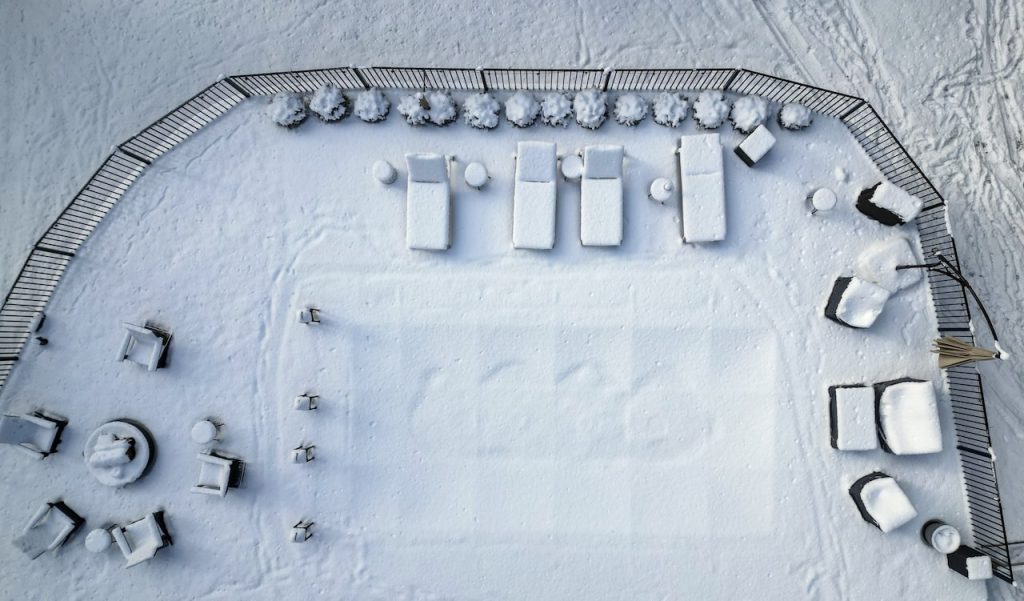
Tracer Pool & Landscape can perform mid-winter checks, adjust anchors, replace worn straps, or plan spring opening services. Booking early means we can ensure your pool is set for an easy spring opening. Schedule an appointment on Tracer Pool & Landscape’s Pool Installs Service page or use our Contact form to book.
Yes, to prevent buildup of water and ice that can damage the cover.
Only if it’s a weight-rated safety cover, then yes. If not, avoid putting any weight on it.
Once a month or after heavy snowfall. Brush off carefully and avoid sharp tools that can damage the cover.
The water level should support the cover without overflowing the edges. Adjust the water level if your cover experiences heavy snow or ice melt.
If the cover sags or the straps are loose, it’s time to tighten the anchors. Anchors should be firm and secure when adjusted.
If panels are torn, stitching is failing, or anchors keep failing to maintain tension, it’s time to replace the winter cover.
Minnesota winters are hard on your pool and deck, but the right winter pool cover and a few minutes of mid-winter care can help. Select the best winter pool covers for Minnesota based on your pool design, yard, snow load, and maintenance budget. Book a mid-winter inspection or spring opening prep with Tracer Pool & Landscape to make sure your pool is safe and set for an easy spring opening.