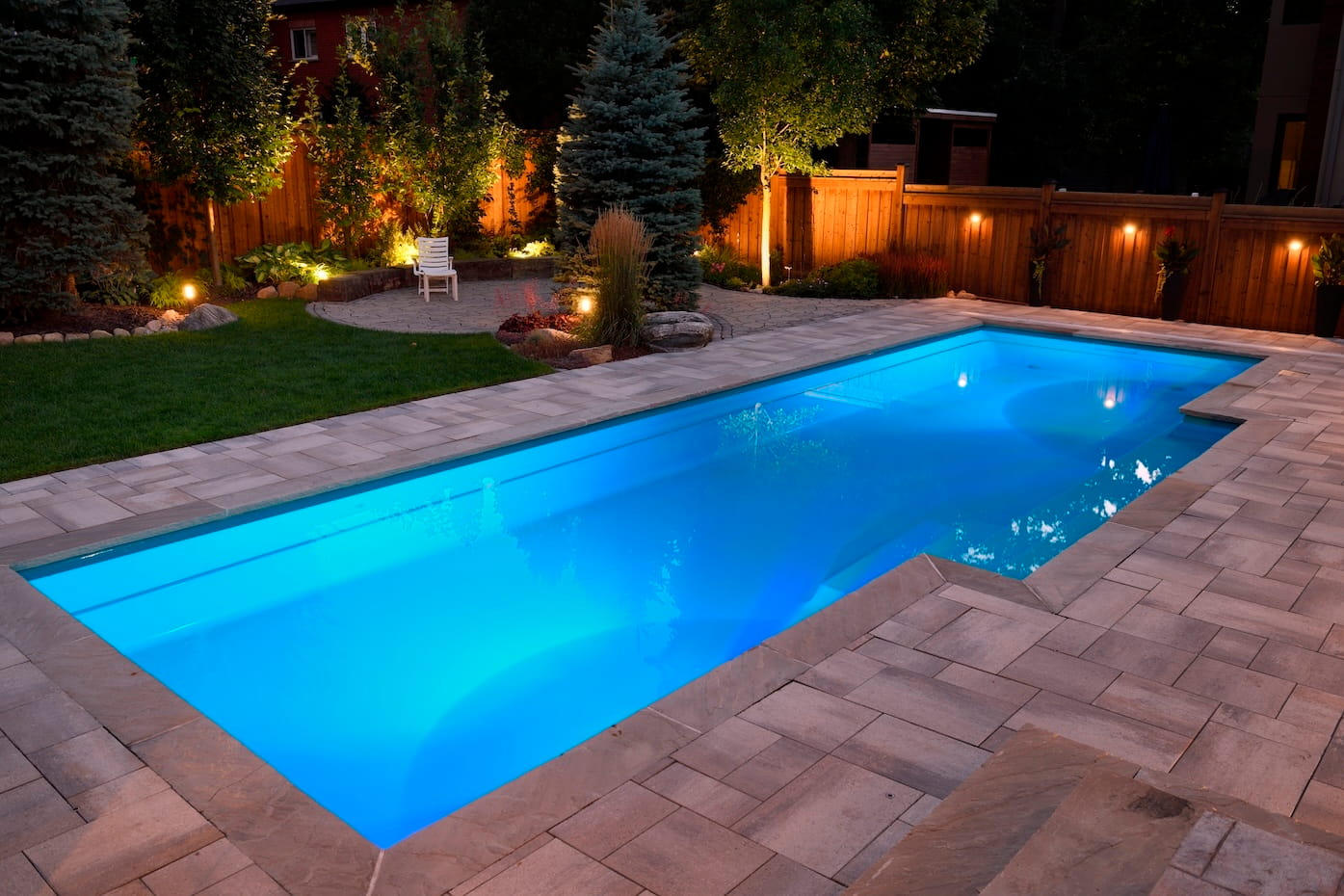
The patio is poured. The pool is installed. And the furniture is set out on the deck. But compared to seeing your design on paper, something can still feel lacking in real life. The space might feel exposed, or even disconnected from your yard completely. This is something thoughtful pool area landscaping can completely change and where biophilic design comes in. By enhancing the connection between people and nature, biophilic outdoor design can help your pool area feel softer.
In this article, we’ll share some practical ways to apply biophilic design-build to a real backyard pool setting so you can create a true nature-inspired backyard design.
At its core, biophilic design is about strengthening the connection between people and nature through elements like plants, water, light, texture, and natural movement. The idea isn’t to make your yard feel “wild” or messy, but instead, to create a space that just feels right.
While biophilic design often applies to the inside of your home, it works even better in your landscape and pool design. Nature has more opportunities to shine outside, and pool areas are especially primed for this type of outdoor sanctuary design.
A decorative swimming pool can elevate the overall visual and sensory experience of a space. Water is one of the most impactful natural elements you can use in your yard.
Pool water creates:
However, everything around your pool can either enhance that feeling or detract from it.
When you apply pool landscaping ideas, you transform your backyard. You soften hard edges, add depth and interest, and create privacy without shutting your pool off from the rest of the yard through biophilic design ideas.
Suddenly, your pool area feels more cohesive. Calming. Like a true backyard oasis design that feels intentional and complete. If you’re exploring ways to improve your layout, this guide to landscaping around swimming pools offers additional ideas to build on.
Successful biophilic backyard design begins with an understanding of the space you’re working with. Things to consider are: what’s already there, sun patterns, existing privacy, wind direction, and drainage. This is where poolside lounge area design becomes essential.
Instead of going against these design elements, biophilic landscaping embraces them, as seen in different types of landscaping. You may notice many of the same elements when you work with Tracer on your biophilic landscape design, all of which are part of a thoughtful landscape design process.
Once you have a grasp on the natural setup of your yard, you can start designing around it.
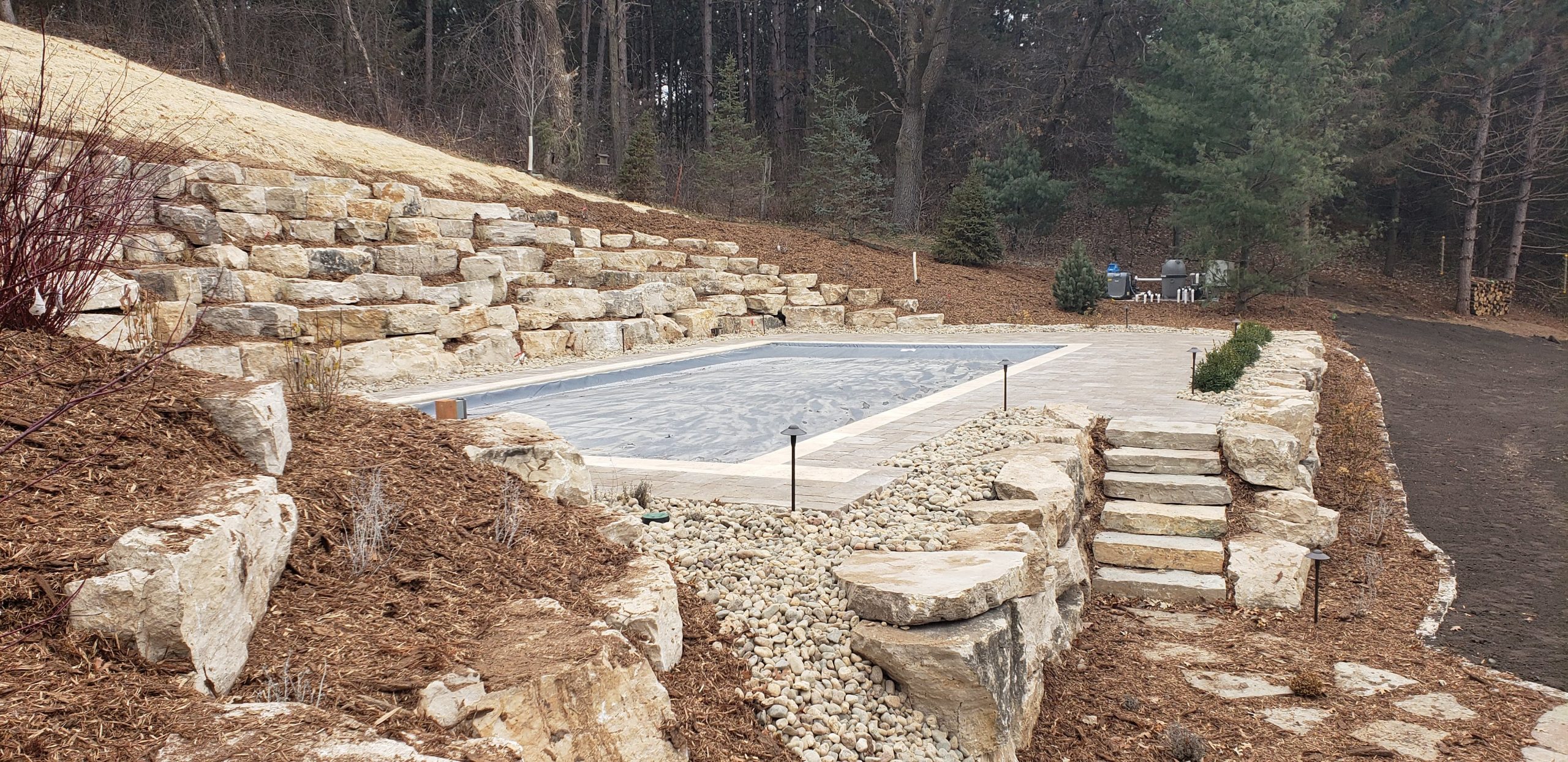
One of the best backyard pool landscaping strategies is to use layered planting. By mixing trees, shrubs, ornamental grasses, and perennials, you add depth and visual interest. Outdoor spaces that embrace layering plants, especially in biophilic garden design, often feel more alive.
For a closer look at layered backyard design, check out this guide to layered landscape design.
Not all landscaping flowers and greenery are ideal for your pool patio landscaping.
When planning poolside landscaping ideas, look for landscaping that’s:
Considerations like debris and maintenance heavily influence your experiences with your pool every day. You don’t want to struggle to keep your landscaping in check or constantly worry about leaves finding their way into the pool.
Whenever possible, pick plants that won’t demand too much attention. Our guide to plants that are good around pools will give you plenty of ideas of ones that will thrive in your yard.
Biophilic design can easily lean towards tropical plants and elements, but unless you live somewhere tropical, those design elements can fall flat.
Strong Minnesota landscape design has to work with our climate. That doesn’t mean your pool area can’t be biophilic or relaxing, but it does mean picking the right plants makes all the difference.
Here in the Midwest, we like to focus on:
Using native plants Minnesota homeowners rely on will help your pool landscaping stand the test of time (and brutal winters). Not to mention, it’ll create a more authentic biophilic pool design.
You can’t overlook hardscape when designing your backyard oasis. Material matters.
Decorative concrete pool patios offer texture and tons of design versatility. Natural stone or similar finishes will look and feel softer than plain concrete.
While few of us can fill our backyard with perfectly round circles and squares, you can still lean into organic shapes that support organic landscape design. Use soft edges on your planting beds and create curved lines when possible.
These elements help bring natural textures in landscaping and warmth into outdoor spaces, supporting a natural and cohesive nature-inspired landscape design.
Natural pool landscaping is often blocked into:
These elements are often steps instead of being blended together. Biophilic outdoor spaces seek to blur those lines.
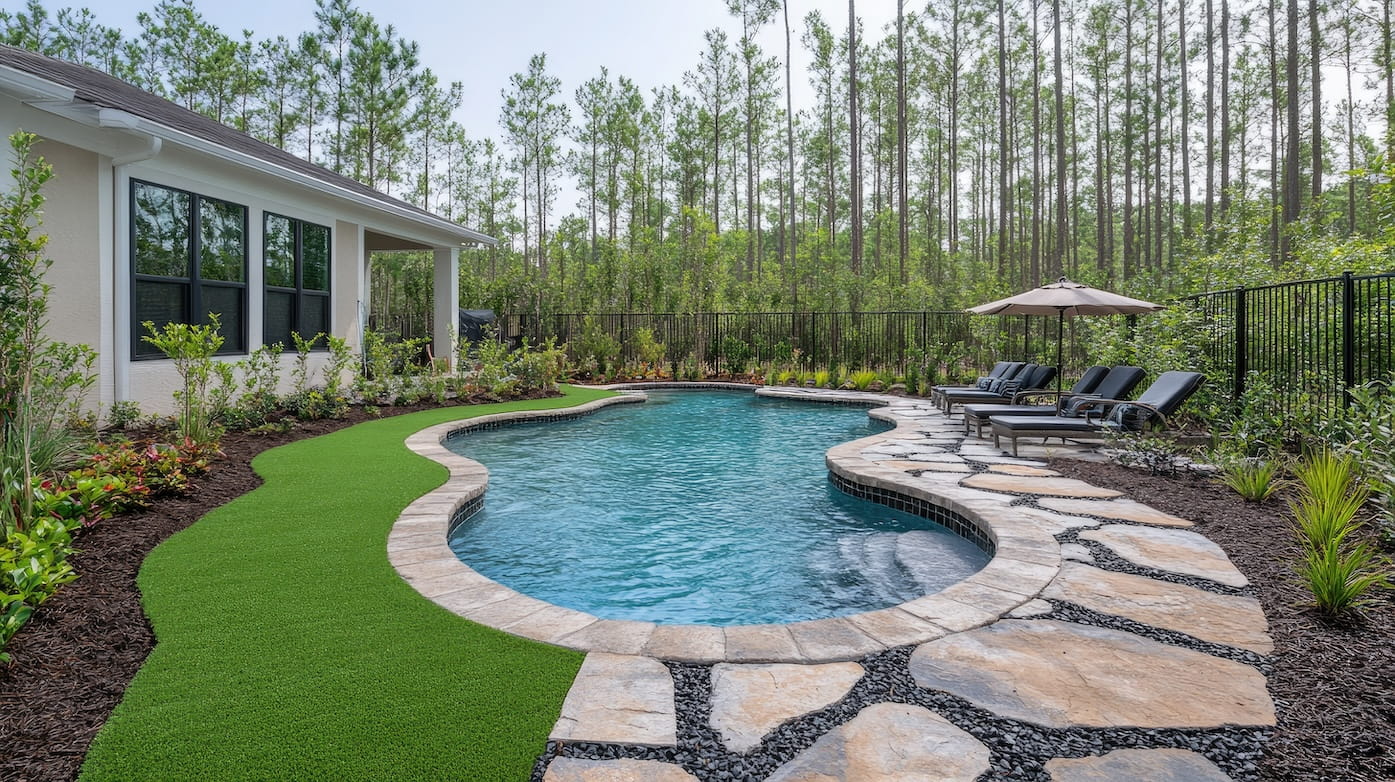
Designing soft transitions between pool, patio and planting makes your yard feel bigger. Decorative concrete walkways are the perfect place to start, especially when designed intentionally. Not only do they tie your pool to patio furniture, but they can also help transition your space into planted beds and other landscaping features.
Smooth transitions improve the look and feel of your backyard and can help you achieve a strong softscape and hardscape balance. Clean edges, planted borders, and intentional lounge zones help connect the pool, patio, and surrounding landscape into one unified space. When transitions feel seamless, the entire pool area feels calmer and more considered.
Privacy is a big part of creating a comfortable backyard pool atmosphere, but privacy fences aren’t biophilic.
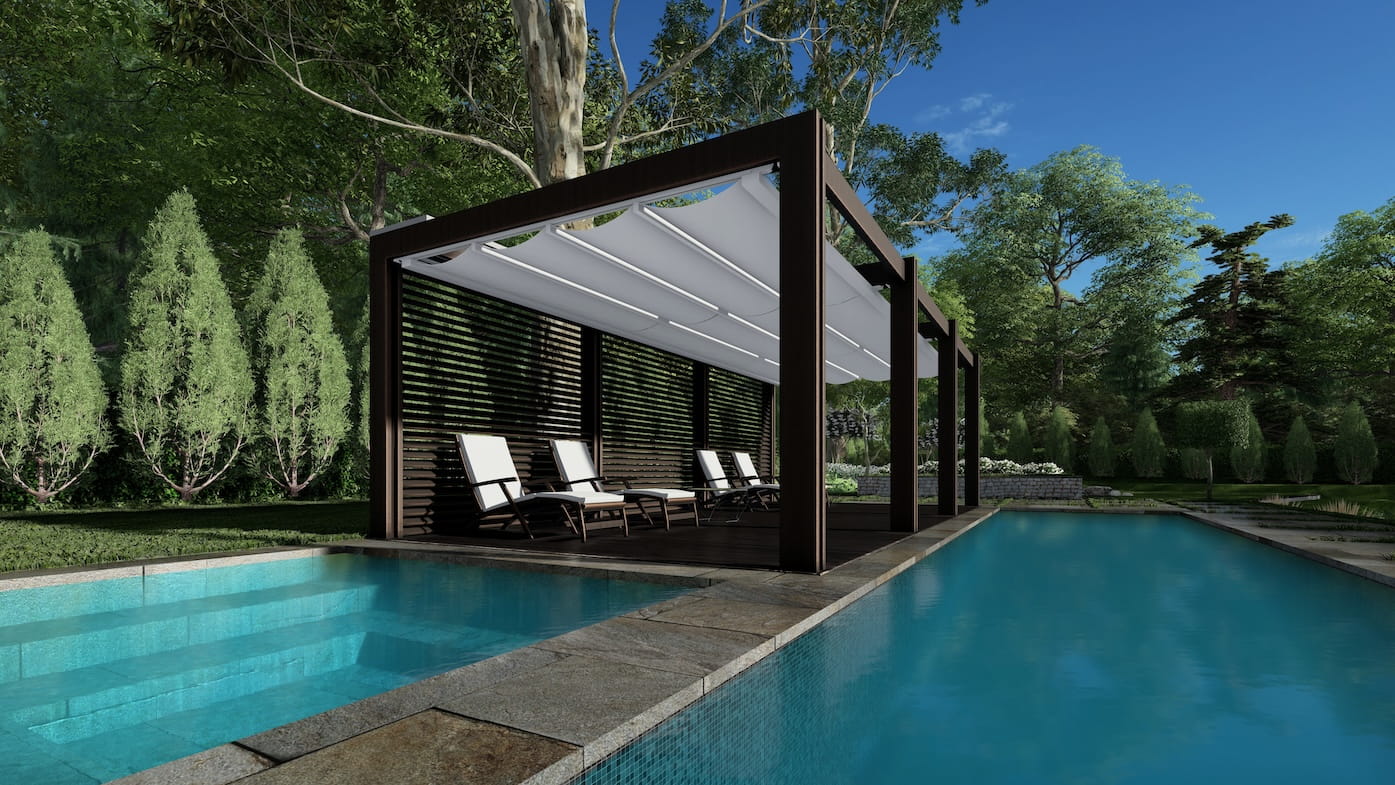
Trees and shade plants around pools should be used to create natural spaces for privacy and, if done correctly, your pool privacy landscaping can make the area feel more secluded. This is another huge part of what makes a calming backyard design feel natural and inviting. Features like pergolas, shade structures, and thoughtfully placed seating areas can further enhance comfort while maintaining an open, natural feel.
Biophilic design is about more than what your yard looks like. It’s about how it feels to be there.
If you’ve been focusing purely on visuals, think about how a biophilic pool area can engage all of your senses, similar to sensory garden design:
Plants, patio furniture, and even your pool can work together to improve the overall look of your home. This is especially important for wellness-focused outdoor spaces – when your space is designed with summer landscaping ideas that encourage comfort, shade, and relaxation.
For many homeowners, the yard is the first thing people notice about your home. Drainage and grading are important, and so is cleaning your pool.
Be intentional about where debris may collect. Does your pool have rocky landscaping around it? Avoid planting things that drop fruit or litter heavily.
Low maintenance backyard landscaping really is about thinking ahead, and this guide to a low-maintenance backyard breaks down what that looks like in practice. How will this pool landscaping idea impact how much you have to clean? Maintain your yard? Take care of your pool? These are all questions you need to consider.
Low-maintenance pool landscaping doesn’t have to be perfect, but when you lean too much into biophilic design without thinking about everyday use, you’ll run into issues.
If you’re going to tear up your yard for a new pool, think about landscaping at the same time. Separately hiring a landscape architect and contractor can quickly become expensive – not to mention difficult to coordinate.
Design build teams work with you on both pool layout and landscape design, simplifying your project into a single cohesive plan for outdoor living design.
Check out our simple guide to the landscape design process and learn what to expect during a landscape consultation. Working with a design build team ensures your pool, patio, and planting are all designed as one put-together environment.
When done right, biophilic design transforms your pool area from something that looks finished into a space that feels complete – connected, calming, and built for how you actually want to live outdoors.
Biophilic design focuses on creating a stronger connection between people and nature. It uses plants, water, natural materials, and organic layouts to make outdoor spaces feel calmer and more immersive.
You can incorporate layered planting, natural materials, soft transitions between spaces, and elements like shade and movement. The goal is to make the pool area feel integrated with the surrounding landscape.
The best plants around pools are low-litter, low-maintenance, and suited to your local climate. Native or regionally appropriate plants are often the best choice for long-term success.
Yes. Biophilic design can support low-maintenance landscaping when you choose the right plants, materials, and layout.
Biophilic design works well in Minnesota when it incorporates climate-appropriate and native-friendly plants. This ensures durability, seasonal interest, and long-term performance.
Natural stone, textured concrete, wood-look finishes, and gravel are all great options. These materials create a softer, more organic appearance while still being durable for poolside use.