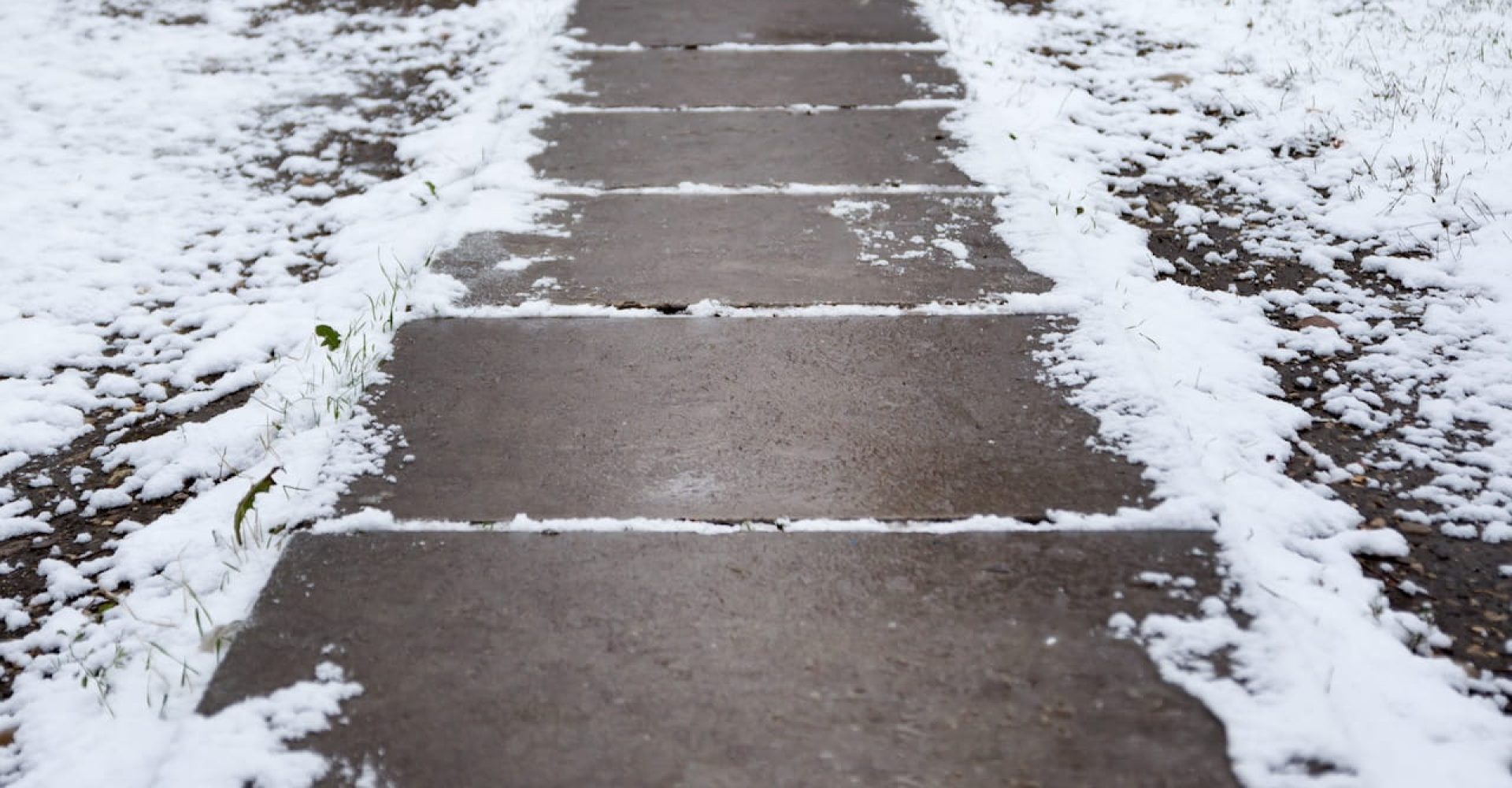
As a Minnesota homeowner, one thing you know is that winter weather conditions are sure to take a toll on your outdoor spaces. The freeze-thaw cycle, snow pile up, and the eventual spring melt can wreak havoc on your patio and pool deck materials. A typical Minnesota winter can cause shifting, cracking, water pooling, or slick surfaces. But not all patio or pool deck materials react the same. Your yard conditions, such as drainage, slope, soil, sun, and snow removal habits also play a part. Let’s dive into pavers vs concrete under Minnesota winter conditions and see which material is best for your property.
There is no way around Minnesota’s winter weather, but there is a way to understand what it does to beat up your patio and pool deck. This understanding is the first step in helping you make your outdoor spaces look better for longer.
The freeze-thaw cycle is one of the main culprits for patio and pool deck winter damage. The cause is basically due to the simple fact that water expands when it freezes. This means that water, either in the form of snow or rain, can seep into soil, rocks, concrete, and pavers when the temperature is above freezing and then expand in place when the temperature dips below freezing.
If temperatures hover around freezing (32 degrees Fahrenheit), rising during the day and then plummeting at night, this cycle can be continuous throughout the winter. The expansion in place when the water freezes can then lead to cracks, erosion, and material breakdown. The widening cracks can then allow even deeper seepage when the ice thaws, making the cycle increasingly more damaging.
The damage can be even worse if there is standing water on the pavers or concrete when the snow melts and then refreezes. This large amount of water caught in place allows more time for it to seep into patio and deck materials. If standing water is a perpetual problem under these conditions, then damage is more likely. It is also a sign that you have poor drainage.
Shoveling and plowing snow along with various deicing methods is another way of life in Minnesota. It is also another way that adds damage to patios, walkways, and pool decks. Shoveling and plowing can cause surface damage through chipping, scraping, or gouging while deicers can cause surface corrosion. Deicers can also accelerate the freeze-thaw cycle.
Pavers and concrete can both experience damage due to these winter conditions, but the type of damage to each material differs.
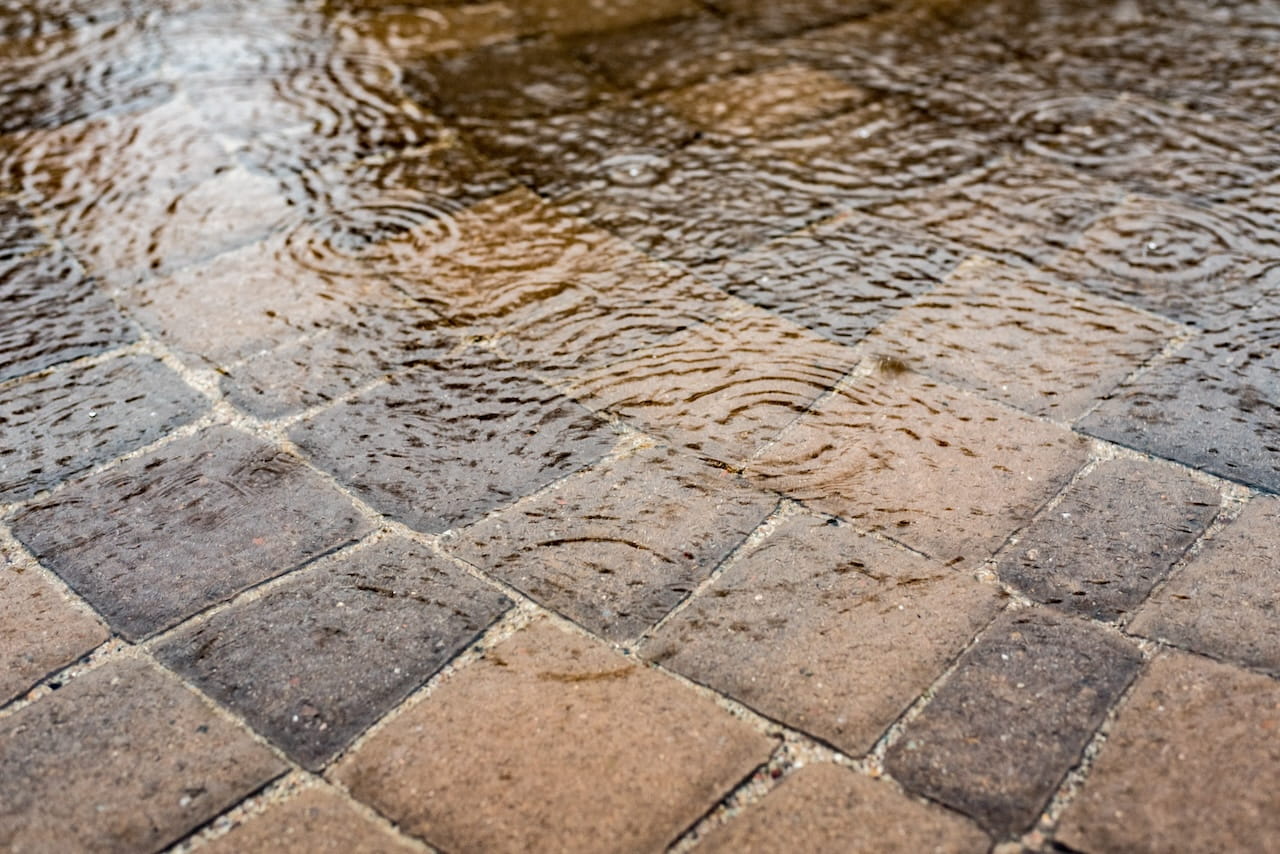
There are several reasons pavers fail in winter, including frost heave, lippage, and edge creep.
Pavers are installed within soil or sand, which can be penetrated with water during the freeze thaw cycle causing this base material to swell and shift. This process is known as frost heave and can lead to cracking, tilting, or structural instability.
Frost heave is not an even process as some areas underneath the pavers can experience more water seepage than others, causing pavers to become tilted and uneven. This process is commonly called lippage and can become progressively worse over time. Lippage can often be most pronounced on the edges of the pavers, known as edge creep.
The common root causes of why pavers shift in winter can include:
Pavers can also be installed using polymeric sand, instead of sand alone. This is a mixture of sand with polymer additives that harden when misted during application. It helps lock the pavers together, creating a more durable and stable hardscape. With polymeric sand, winter damage can be mitigated as the joints between pavers are stronger and less penetrable. Proper installation and maintenance, however, is crucial to these benefits.
The main way that concrete fails under winter conditions is by cracking. This is caused by soil movement and water intrusion experienced during the freeze thaw cycle. Concrete cracks in winter can be either hairline or structural, with a significant difference between the two.
Hairline cracks, as the name suggests, lack depth and are only on the surface of the concrete. Structural cracks on the other hand are deeper and can compromise the structural integrity of the concrete, leading to larger issues, including replacement. Hairline cracks that are not taken care of can lead to deeper and more damaging structural cracks.
Another way concrete can fail in winter is deicing salt damage. Concrete can spall or scale from deicing chemicals. Scaling is when small pieces from the top layer of concrete flake off while spalling is much more serious, where deeper chunks of concrete break off, compromising the concrete’s structure.
Decorative concrete is a highly sought-after aesthetic for pool decks and patios, but it also requires extra care under harsh winter conditions. Proper sealing is a must to mitigate both freeze-thaw and deicing chemical damage. It is advised to use plastic shovels and sand, instead of metal or chemicals for clearing ice and snow.
Knowing that both pavers and concrete are susceptible to damage from Minnesota winters, what is the best choice for Minnesota homes?
The answer depends on several factors:
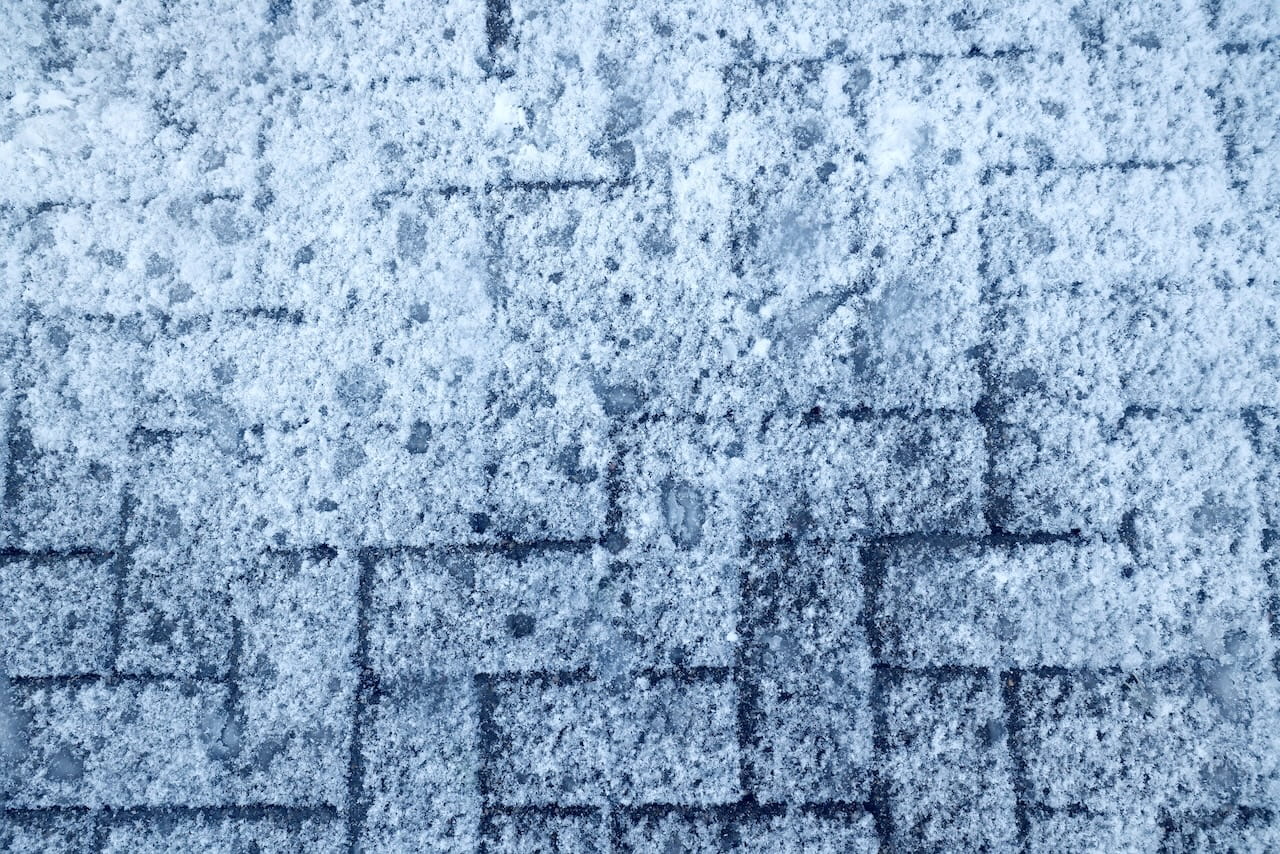
Since drainage problems can be an underlying cause of patio and pool deck winter damage, finding workable patio drainage solutions can extend the lifespan of your materials.
By improving your property’s grading, you can ensure water goes where it should, instead of pooling where it shouldn’t. You can also add downspout extensions that will improve your meltwater routes.
Adding gravel around pipes and drains can help move water away from your foundation and prevent erosion and pooling. This can be especially useful with clay or compacted soil. However, if you have fine or poor soil, gravel can make drainage worse.
As deicer can cause damage to both pavers and concrete, practicing safer deicing habits can help the longevity of your patio or pool deck. Using less is always advisable as well as applying it only in areas that most need it, instead of across wider swathes.
Winter snow removal is a way of life in Minnesota, but there are ways of doing it that can help protect your patio surface.
Snow removal tips that avoid scraping finishes include:
After a long Minnesota winter, spring is always a welcome arrival, but it also means it is time for patio and pool deck maintenance to kick in. This is best started with an inspection of your patio or pool deck to assess any damage that may have occurred over the winter.
Start by clearing up any debris such as dirt or leaves along with any salt or ice melt residue. Then, clean the surface of your patio or pool deck to remove any dirt or grime. Once your patio or pool deck is clear and clean, inspect for any damage. You should look for cracks, spalling, or pitting in your concrete and any shifting or unevenness in pavers. Also inspect for gaps in your paver joints.
This is also a good time to check your drainage and look for any pooling or water that flows towards your home and not away from it. This also includes inspecting your gutters and downspouts.
Some damage, like hairline cracks in concrete or slight tilting of pavers can be more cosmetic than serious. But, if you find any deeper damage is found or you notice problems with your drainage or grading, make sure to address the issues immediately. Much can be prevented if caught early and remedied right away.

The remedy for any damage falls into two camps–repair or replacement.
If only some of your pavers, and not the whole patio, have shifted or are uneven, it can make sense to reset/re-level them. This can help restore their appearance, cut down on tripping hazards, and fix minor drainage issues.
If, however, more than a few isolated pavers have noticeably shifted or dipped, there may be a much larger underlying cause that needs to be addressed and may require a rebuild of your base.
Look for:
Replacing a concrete patio or pool deck can be expensive, so it can be cost-effective to catch minor damage early and repair it. This can be done if the damage is localized, mostly on the surface, and is not structural. The condition of your underlying base is also important. If it is sound, repair can be a viable option.
Replacement is the smarter call if you have chronic drainage issues, the base of your structure is failing or your rebar is exposed or corroding, or the unevenness is widespread and causing trip hazards.
Minnesota winters can take their toll on your patio and pool deck materials. Pavers tend to shift, settle, or “lip,” while concrete tends to crack, spall, or scale. But, your choice of materials is not the only reason for weather damage. Faulty drainage or improper base preparation can be the root cause of most problems. When choosing between pavers vs concrete the best choice also depends on your site, including slope, downspouts, soil type, shade, and overall use. The most important thing, however, is catching winter damage early when it is still fixable.
You can reach out to Tracer Pool and Landscape to enlist their expertise on patios, pool decks, and drainage to keep your outdoor spaces in tip-top shape. Contact us to request an evaluation or quote.