A UV pool sanitizer can be one of the most misunderstood products on the market. Some pool owners think UV means swimming without chemicals. Others worry UV units are complicated or only worth it for commercial applications.
The truth is, when sized and selected correctly, UV is neither magical nor marketing hype. It’s simply one tool that can help you achieve more comfortable, stable, and manageable pool water, when used as intended.
In this guide to UV pool sanitation systems, we’ll dive into exactly what UV does and doesn’t do, and where it fits into a residential pool system. If you’re in the market for upgrades this season (or starting research for next year), this guide will help you decide whether UV makes sense for your pool. After you’ve finished reading, learn more about Tracer Companies and our full line of products and services.
A UV pool sanitizer (often called a UV-C pool sanitizer) is a pressurized container that exposes pool water to UV-C light as it passes through the unit. The ultraviolet light used in an ultraviolet pool sanitizer penetrates the cell walls of microorganisms and inactivates them by damaging their DNA. Without intact DNA, they can’t reproduce or multiply.
What it is:
What it isn’t:
Note that UV doesn’t provide a residual sanitizer in the water. Once water leaves the UV chamber, it’s no longer under the effect of UV. This is why some form of chlorine (or another residual sanitizer) is always required to keep pool water safe when it’s not actively circulating.

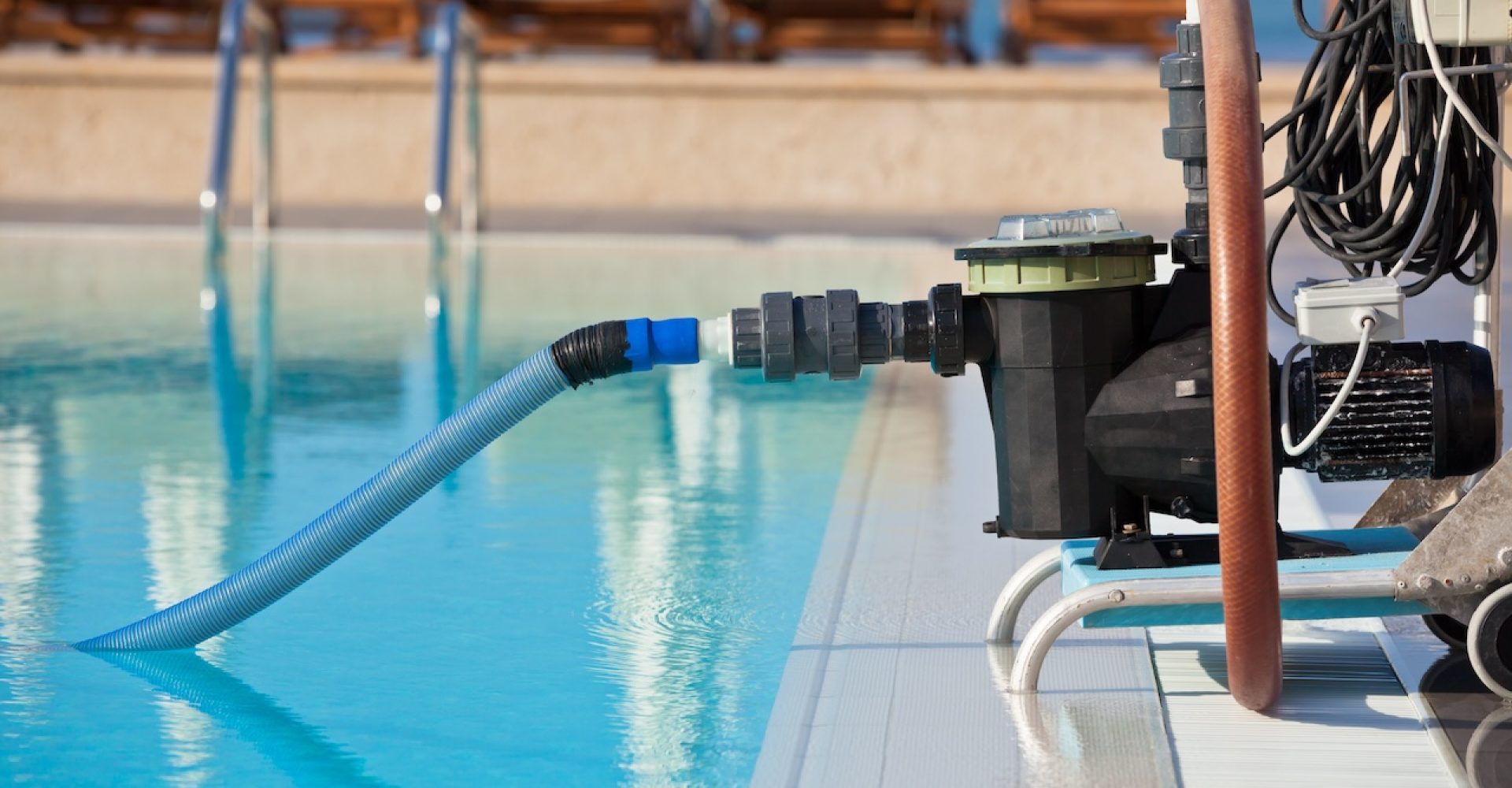
A UV sanitation system works quietly in the background as part of your normal circulation loop. Water is pulled from the pool by the pump, flows through the filter, then passes through the UV chamber before returning to the pool.
It sounds simple, but several factors affect performance:
UV pool system sizing is based on two main factors: your pool volume and your pump flow rate. Pool owners often aim to size by turnover rate, but real-world plumbing and pump settings affect the actual UV pool sanitizer flow rate through the system.
Effective UV sanitation depends on exposure time and intensity, sometimes described as UV dose in pool systems (UVT, measured in mJ/cm²), which is simply a way of explaining how much UV energy the water receives as it passes through the chamber.
In ponds and decorative water features, UV clarifiers are commonly used to help control algae. Residential pool UV sanitation systems are sized and designed very differently to handle:
A pond clarifier and a residential UV pool sanitizer are not interchangeable.
UV helps reduce the workload on chlorine, but doesn’t eliminate chlorine. If someone is selling you a “chemical-free” pool based on UV alone, be skeptical.
Homeowners often ask: “Does a UV pool sanitizer reduce chlorine demand in a pool?”
The answer is yes, and no. The value of UV isn’t something you see on a spec sheet, it shows up in how your pool looks, feels, and behaves day to day.
That strong chlorine smell many people associate with pools? It’s actually combined chlorine, also known as chloramines. When you have a chloramines pool reduction, the less “pool smell” you’ll have. With combined chlorine reduction, there will also be less eye and skin irritation. For more information on reducing chlorine, see Tracer Companies’ guide.
Because UV supports your overall sanitation loop, you may also notice:
For pool sanitation for heavy use, the more swimmers you have, the more UV helps as a second layer of defense.
If your family struggles with sensitive eyes or skin after swimming, UV won’t replace proper pool chemistry, but it can act as a pool sanitizer for sensitive skin when chemistry is balanced.
UV is a support system, and not a cure-all.
It won’t:
High phosphate levels or a significant buildup of combined chlorine can also limit UV effectiveness if not corrected, so chemistry balance remains essential. When your fundamentals, like filtration, circulation, and chemistry, are solid, UV can really shine. When those basics are ignored, expectations can lead to disappointment.
Ozone systems can be effective, but they typically require more monitoring and complexity. UV is simpler for most homeowners to understand, operate, and maintain.
Saltwater systems generate chlorine, while UV doesn’t. Many pools successfully use both together.
This is by far the most common setup. Adding UV to a chlorine pool can offer benefits without overcomplicating your routine.
When is UV worth it?
Learn how to choose a low-maintenance pool setup to complement your UV system.
If you’re asking where to install a UV pool sanitizer, the answer is always on the clean side of the system. Most are installed after the filter and in-line with return water.
However, placement relative to heaters or chlorinators varies by manufacturer and local code. Electrical and bonding work should always be handled by licensed professionals.
Note that in freezing climates like Minnesota, winterization is critical.
UV units must be:
Freeze damage is completely preventable with correct pool closing procedures. Any UV system used in cold climates should include clear freeze-protection instructions from the manufacturer.
To learn how to safely close your pool for the off-season, read our tips here.
UV maintenance is simple, but important. Diarize these dates:
UV also relies on good filtration as dirty water limits its effectiveness. Choose the best pool maintenance system for your UV unit and read tips for keeping your swimming pool clean all year round.
Avoid these common pitfalls homeowners often face:

If you’re in the market for a UV pool sanitizer, it’s best in the following situations:
It’s always a good idea to refer to your UV pool sanitizer safety notes at the start and end of each season. Take note of the following:
When it comes to talking to the professionals, here’s what to ask:
In addition, below is a mini FAQ with a few quick answers:
A UV pool sanitizer is a tool that can help you achieve more comfortable, stable, and manageable pool water, when it exposes microorganisms to UV light, preventing them from reproducing.
Yes. It can kill bacteria, viruses, and some algae.
UV does not replace chlorine or other residual sanitizers because it only inactivates microorganisms while water passes through the chamber and leaves no lasting protection in the pool.
Yes. UV breaks down chloramines faster than chlorine alone.
Yes. If cloudiness is caused by sanitation issues, not filtration problems.
No. UV won’t kill algae on its own.
Sizing depends on pool volume and pump flow rate, not just gallons.
After the filter, in the return line.
Lamp replacement, quartz sleeve cleaning, and leak checks.
Typically $500-$2,500+, depending on size and installation.
Yes. UV and salt systems work very well together.
UV units must be properly drained or bypassed to prevent freeze damage.
For Minnesota pools with a short swim season, UV can be worth it, especially for heavy-use family pools or owners who place a high value on comfort. Just remember that UV isn’t better than chlorine and it doesn’t replace chlorine, but when used correctly, it can absolutely help.
Make pool ownership easier and swimming more comfortable this season and contact Tracer Companies. If you’re in the market for a pool and want to know how to choose the best low maintenance pool, we can help there too.