Vinyl liner pools are one of the most popular inground pool options for homeowners who want lower upfront costs, a smoother surface, and flexible design choices. They are built with a custom frame and a vinyl liner that creates the pool’s inner surface, which makes them different from other inground pool options, like fiberglass and concrete.
This guide explains:
Let’s dive into this popular pool choice to help you decide if a vinyl liner pool makes sense for your yard, budget, and long-term plans.
There are three general types of inground pools:
Vinyl liner pools are built with a structural wall system that is then covered with a vinyl liner to form the pool’s interior surface, which holds the pool water. They differ from other in-ground pool options in both structure and materials.
Of the three main types of inground pools, vinyl inground pools usually have lower upfront costs, especially when compared to concrete pools. They also offer more shape flexibility than fiberglass pools, making them a better option for a wider range of backyard configurations. They are not as durable, however, as concrete or fiberglass and won’t last as long as either of those options.
Building a vinyl liner pool in your backyard has several steps, including excavation, panel installation, floor preparation and liner fitting, and finally plumbing and finishing work. Let’s take a look at each of these steps so you can understand what goes into installing this type of pool.
This first step involves digging or excavating the site where the pool will be located in your backyard. This includes:
Vinyl liner pools can be ideal for yards that are not symmetrical or cannot accommodate a prefabricated fiberglass pool shape. Custom shapes and layouts are possible with vinyl liner pools, which make them a flexible fit for many different backyard configurations.

Once your pool site is properly excavated and prepared, wall panel installation can begin. This step involves installing steel or polymer panels that will form your pool’s structure. This is different from the liner, which is installed later to form your pool’s surface. The wall panels form the pool’s structure within the ground, which is later lined with the vinyl covering.
Wall panels are bolted together and then attaching A-frame braces at each joint. The panels are then anchored into a poured concrete perimeter, which locks them in place. Certain components of your pool equipment are also installed at this stage, such as skimmers, returns, and lighting.
Once the walls of your pool are constructed, it is time to prepare your pool floor for the installation of the vinyl liner. This step involves making sure the base of the pool is smooth with the proper slope and desired pool shape. The materials used to create the smooth floor is often a mixture of vermiculite, cement, or sand.
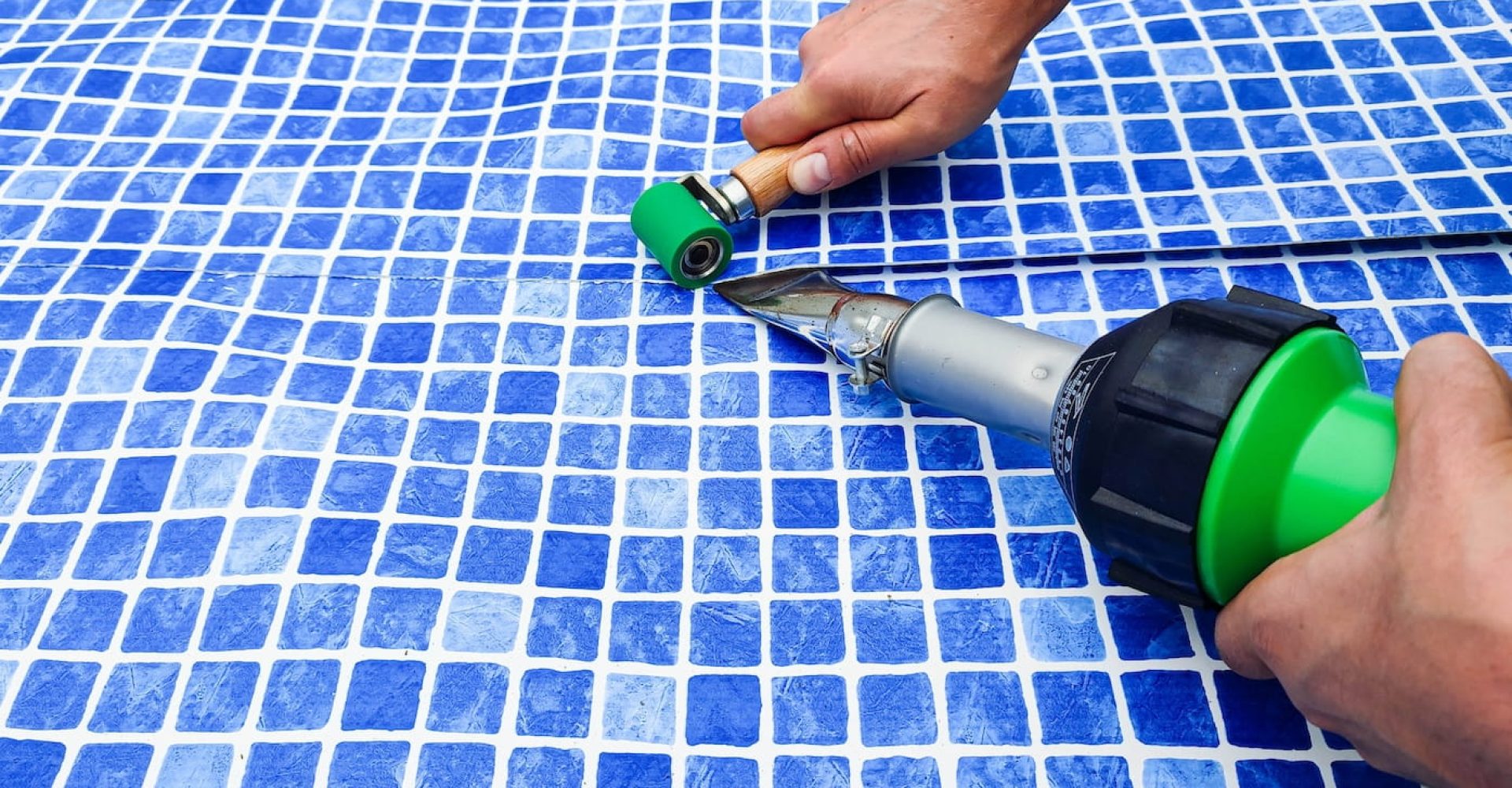
After proper floor preparation your vinyl liner can be fitted to create the interior surface of your pool. This step includes placing a custom liner inside the prepared structure to create the pool surface. The vinyl liner is first secured to the top of your walls and then a special vacuum is used to pull it into place. It is important that it is pulled tightly and no wrinkles are present.
Liners are usually about 20 millimeters thick, but a thicker lining will often be more durable. Liner installation is recommended to be done in warmer weather (above 75 F) so it is more pliable, which makes preventing wrinkles easier.
Now that your pool liner is fitted, it is time to install the plumbing so your pool can be filled with water. Plumbing installation includes installing new gaskets and faceplates on your drains, returns, and skimmers to prevent leaks and then filling your pool with water. This is done while the vacuum is still running until the pool contains at least 6 inches of water.
The final step in your pool installation is the finishing work that includes decking, coping, and landscaping. Coping runs around the pool edge and can be made of aluminum, stone, brick, or pavers. Once the coping is installed, the rest of the pool decking can be put in. The finishing touch will be the landscaping that will complete your pool aesthetics.
Understanding the pros and cons of this pool choice is useful in figuring out whether vinyl liner pools are worth it. Knowing why homeowners choose this pool option and what their specific drawbacks are can be helpful.
There are several factors that make vinyl liner pools attractive to homeowners.
Vinyl liner pools do come with lower upfront costs than most other inground pool types. It is often seen as an easier entry point for household budgets looking to create a backyard pool oasis.
As a material, vinyl has a much softer feel underfoot than either fiberglass or concrete. This can create a better usage environment, especially for young kids with more sensitive feet.
Vinyl liner pools can be customized, giving you design flexibility to fit your style and your backyard dimensions.
Not every yard can accommodate prefabricated fiberglass shells or the intensity of concrete pool construction. Vinyl liner pools are able to match a wider range of backyard layouts, both for size and shape as well as construction access.
Overall, vinyl liner pools are common because they generally offer an approachable entry point for families looking to install an inground pool that fits their lifestyle, their yard, and their budget.
The main drawback of vinyl liner pools is the simple fact that the liner that creates the pool’s surface will not last forever. It will eventually need to be replaced. Some of the things that can affect a vinyl pool liner include:
Sharp objects, debris, pets, and even insects can cause damage to a vinyl pool liner. Because the surface is softer than concrete or fiberglass, homeowners need to be mindful of what enters the pool and how the liner is maintained.
Sun exposure and improper chemical balance can cause a vinyl liner to fade over time. Fading may also be a sign that the liner is losing elasticity and becoming more brittle, which can increase the risk of future damage.
Vinyl liners can be sensitive to improper water chemistry. High concentrations of chlorine, for example, can break down the vinyl material and cause the liner to degrade faster than expected.
Vinyl is less durable than the hard shell surfaces of concrete or fiberglass. As a result, the liner typically needs to be replaced after about a decade. However, the pool structure itself can last for several decades, so replacement usually applies only to the liner, not the entire pool.
These downsides are a part of the reality of owning a vinyl liner pool, but as every pool type has downsides, they are certainly not deal breakers.

When looking at pool costs, you are not only looking at the price for the initial installation but also the long-term ownership costs, which include everyday maintenance, repairs, and replacement. Each type of pool is going to differ in both the cost of upfront installation and long-term ownership.
The vinyl liner pool cost for installation is more affordable when compared to concrete pools, but the vinyl liner will eventually wear out and need to be replaced while a concrete pool is more durable over time.
If you are installing a vinyl liner pool, you should plan for liner replacement within about a decade. In this planning, however, remember that your vinyl liner replacement cost is lower than the initial installation as only the liner is being replaced and not the walled structure.
Installation costs are most affected by:
Most vinyl pool liners last around 7 to 12 years, though their lifespan can depend heavily on several factors, including:
All of these factors can play a part in your liner wearing out faster, yet most of them are within your control through proper installation, landscaping, maintenance and cleaning, and overall usage and care.
As a homeowner, signs you need to look out for that may indicate the need for a liner replacement include:
Vinyl liner pool maintenance is one way you can have some control over the longevity and condition of your pool liner. Vinyl liner pools are not the most maintenance heavy pool type, but they are not considered low maintenance either. As with any pool, understanding the maintenance reality of ownership before you invest in installing one can help you plan ahead for the time and cost of upkeep.
Vinyl liner pools still require regular cleaning, circulation, and water testing, but surface care is different from concrete as you need to be careful not to puncture or damage the lining. The liner requires regular brushing and vacuuming along with watching for tears, wrinkles, or fading. You also want to make sure to remove debris continuously as it can cause punctures.
Draining your vinyl liner pool needs to be done with care and under the supervision of a professional, as the liner can shrink quickly when it is not full, causing significant damage.
As discussed earlier, water chemical balance is very important for a vinyl liner pool because poorly managed chemistry can shorten your liner’s lifespan. Regular water testing is imperative.
As one of three inground pool options, let’s compare vinyl liner pools side-by-side with the fiberglass pool option.
Overall fiberglass is more expensive, although quick to install than vinyl but comes with lower long-term costs and less maintenance, especially with its more algae resistant surface. The hard shell of fiberglass is just a more durable material than vinyl, but fiberglass pool shells are pre-manufactured, which allows for quick installation, but much less customization or design flexibility.
When it comes to surface feel, vinyl is much softer to the touch and just feels nicer than a fiberglass surface.
Fiberglass is often cited as a plus for homeowners who are looking for low maintenance pool options. Vinyl, however, is not considered to be necessarily high-maintenance, except that your ability to maintain an optimal chemical balance in your water will directly affect your lining’s durability. Vinyl liners need to be replaced more often than fiberglass shells, which can last as long as 50 years.
Concrete is the other inground pool option you need to look at in comparison to vinyl liner and fiberglass.
Concrete is the most expensive type of inground pool to install, but it comes with premium customization options and a very long structural lifespan. It is the most durable pool material, which can last well over 50 years even though it requires resurfacing about every 10 to 15 years. It does, however, require more hand-on maintenance than vinyl.
The long-term ownership experience for a concrete pool can be expensive as it does require on-going maintenance that comes with a higher cost, but it is a far more permanent structure than either vinyl or fiberglass, making it a home and lifestyle investment.
Generally, vinyl liner pools work well in Minnesota, although the colder climate and freeze-thaw cycles require extra attention. Pools are seasonal in Minnesota, which requires homeowners to go through the seasonal closing and opening process each year. This can add to your maintenance costs and require extra time in both spring and fall.
Overall, vinyl liner pools can work well in Minnesota when they are installed properly and maintained with seasonal care.

Vinyl liner pools are often a strong fit for homeowners who want an inground pool with a more manageable upfront cost, more layout flexibility than fiberglass, and a comfortable surface for family use.
If you are looking for a low-maintenance pool, which requires less upkeep and are not as concerned about design flexibility, a fiberglass pool, although more expensive upfront, may be a better fit.
If you are looking for a larger investment in your home and want to create a high-end, premium custom designed pool area on your property, then a concrete pool may be more inline with what you are looking for.
Vinyl liner pools are popular for a reason and offer a legitimate option for creating a backyard oasis for many homeowners. Once you understand the tradeoffs, they go beyond a type of “cheaper version” of an inground pool with their own clear strengths. In the end, the best choice for you depends on your budget, your maintenance style, your backyard layout, and how long you plan to stay in your home.
Vinyl liner pools are inground pools built with structural walls and a vinyl liner that forms the interior surface.
They are often less expensive upfront, though long-term costs can vary depending on liner replacement and maintenance.
Most vinyl liners last about 7 to 12 years with proper installation, usage, and maintenance.
They are not more difficult to maintain than other in-ground pools, but water chemistry must be managed carefully to protect the liner.
Yes, vinyl liner pools are available in many shapes, sizes, and design layouts and one of the reasons they are popular.
Yes, they can work well in cold climates when they are installed and winterized properly.
Yes, liners can be punctured or damaged, which is one of the main tradeoffs of this pool type.
They can be a very good value for homeowners who want flexibility that comes with a lower upfront cost.