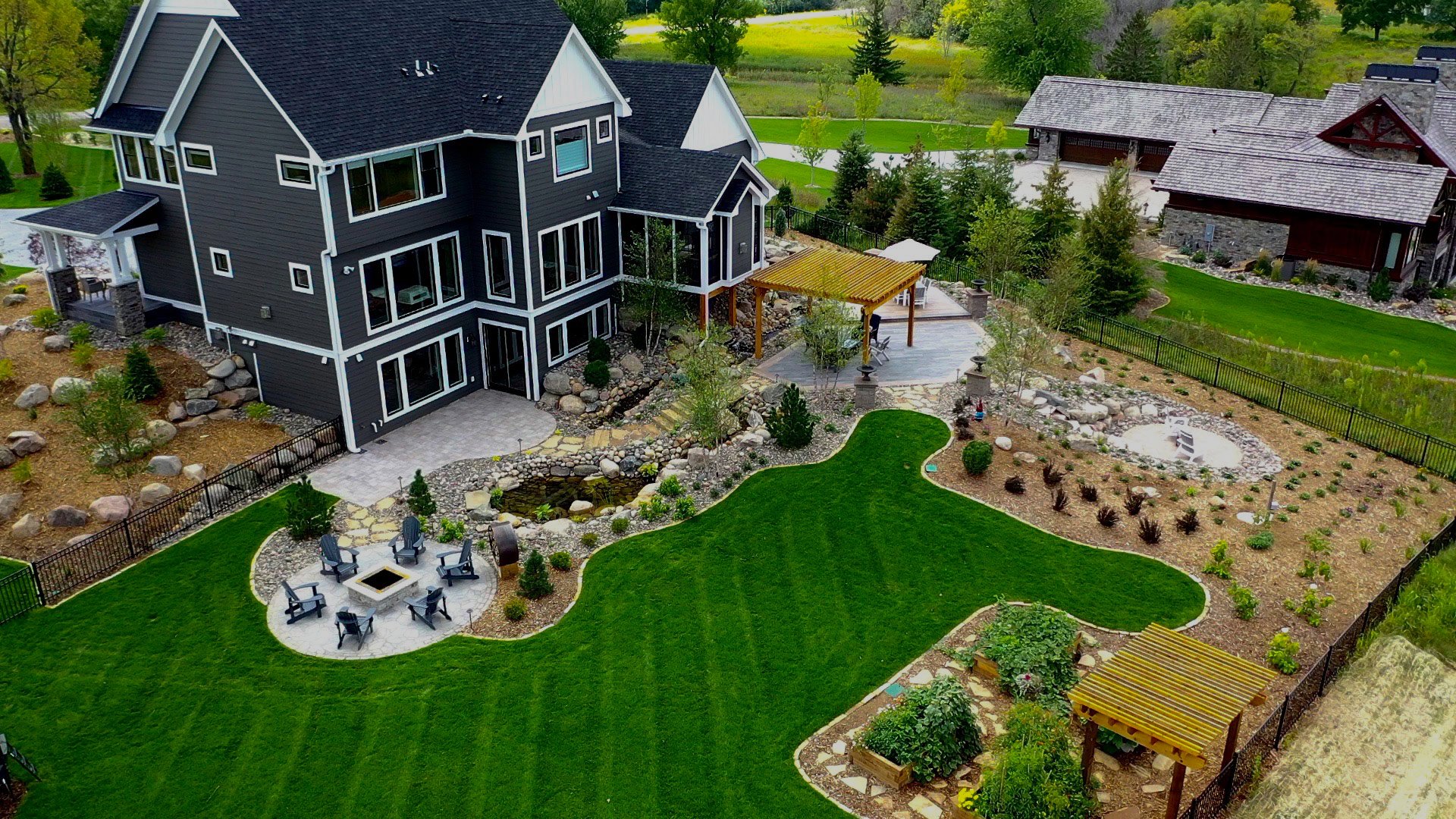
Yards often feel incomplete – not because they lack design or projects to improve — but because of transitions from one surface to the next. Lawn bleeding into mulch beds, crooked landscape borders, and hardscape overflowing into planting areas are some spaces that can look purposeful and manicured with clean transitions.
Decorative concrete edging is one of the easiest ways to create defined transitions in your yard. It adds curb appeal, reduces lawn maintenance, and cleanly separates different areas of your landscape. From edging flower beds to framing a patio or defining an area around a poolside entertaining space, edging can enhance both the look and functionality of your outdoor living area.
Tracer Pool & Landscape can help make your dreams of custom landscaping borders that complement your Minnesota yard a reality with our design and build services.
Decorative concrete edging is just as it sounds – concrete installed to create borders around your lawn, planting beds, walkways, patios, pool landscaping, and other outdoor areas. It creates clean, permanent seams and makes your yard appear more purposeful. Don’t settle for plastic, rubber, or other temporary landscape borders when concrete landscaping edging can fit your yard’s needs.
Concrete flower bed edging prevents grass from encroaching on garden spaces and provides defined lines between landscaping and grass. Concrete garden bed edging also helps highlight your plants and reduce maintenance.
Likewise, concrete garden edging will hold mulch, gravel, decorative stone, and soil in place. Your sidewalks and paths will be protected from debris build-up and you’ll enjoy tidier edges around your landscaping.
Concrete edging for patios separates hardscape from landscaping. It also keeps planting beds from creeping into your outdoor entertainment space.
Decorative concrete curbing around your pool deck and surrounding landscape elements ties things together so they look purposeful. It also creates a defined edge between your lawn and hardscaping.
But decorative edging isn’t only for aesthetics. Concrete edges make mowing easier, trim time faster, contain mulch, and keep your landscape design looking tidy long into the future.

There are many different edging materials available for your yard. While all have their advantages, many don’t hold up to concrete.
Plastic edging is one of the least expensive options out there. However, since it’s not permanent, it can shift, crack, or become exposed with time. Metal can create sleek modern lines, but lacks the warmth and decorative appeal of concrete. Wood can work well in rustic settings, but Minnesota’s humidity, snow melt, and freeze/thaw cycles cause wood to rot and deteriorate over time. Brick and paver borders create beautiful interest, but like gravel, can settle or shift as the individual pavers move.
Concrete provides value in many different areas. Not only is it durable and versatile, but it can also be customized to fit any style or décor. Since concrete creates one solid edge, it’s also easier for homeowners to mow along their borders. You’ll spend less time trimming around beds and other landscape features.
Because it creates clean lines and lasts for years, concrete curbing is one of the most attractive forms of edging. What’s more, it’s one of the most functional forms of low-maintenance yard edging you can install. Plastic, wood, and individual pavers require replacement or adjustment from time to time, but concrete is a low maintenance yard edging that can last for decades.
Concrete offers plenty of value because of its versatility and custom appearance, and is a durable landscape edging that typically provides decades of service with minimal intervention.
| Edging material | Best for | Main upside | Main drawback |
| Concrete | Long-term yard definition | Durable and custom-looking | Higher upfront cost |
| Plastic | Quick budget projects | Cheap and easy to install | Can shift or look flimsy |
| Metal | Modern clean lines | Sleek appearance | Less decorative warmth |
| Wood | Rustic gardens | Natural look | Can rot or warp |
| Brick/Pavers | Traditional style | Strong visual character | More joints and possible shifting |
One of the biggest advantages of decorative concrete borders is versatility, as it can be used in nearly every area of your landscape.
Planting beds in your front yard look best with defined edges as they make your flowers and shrubs stand out and help your home’s curb appeal. Concrete lawn edging creates crisp lines for a manicured look that matches your property.
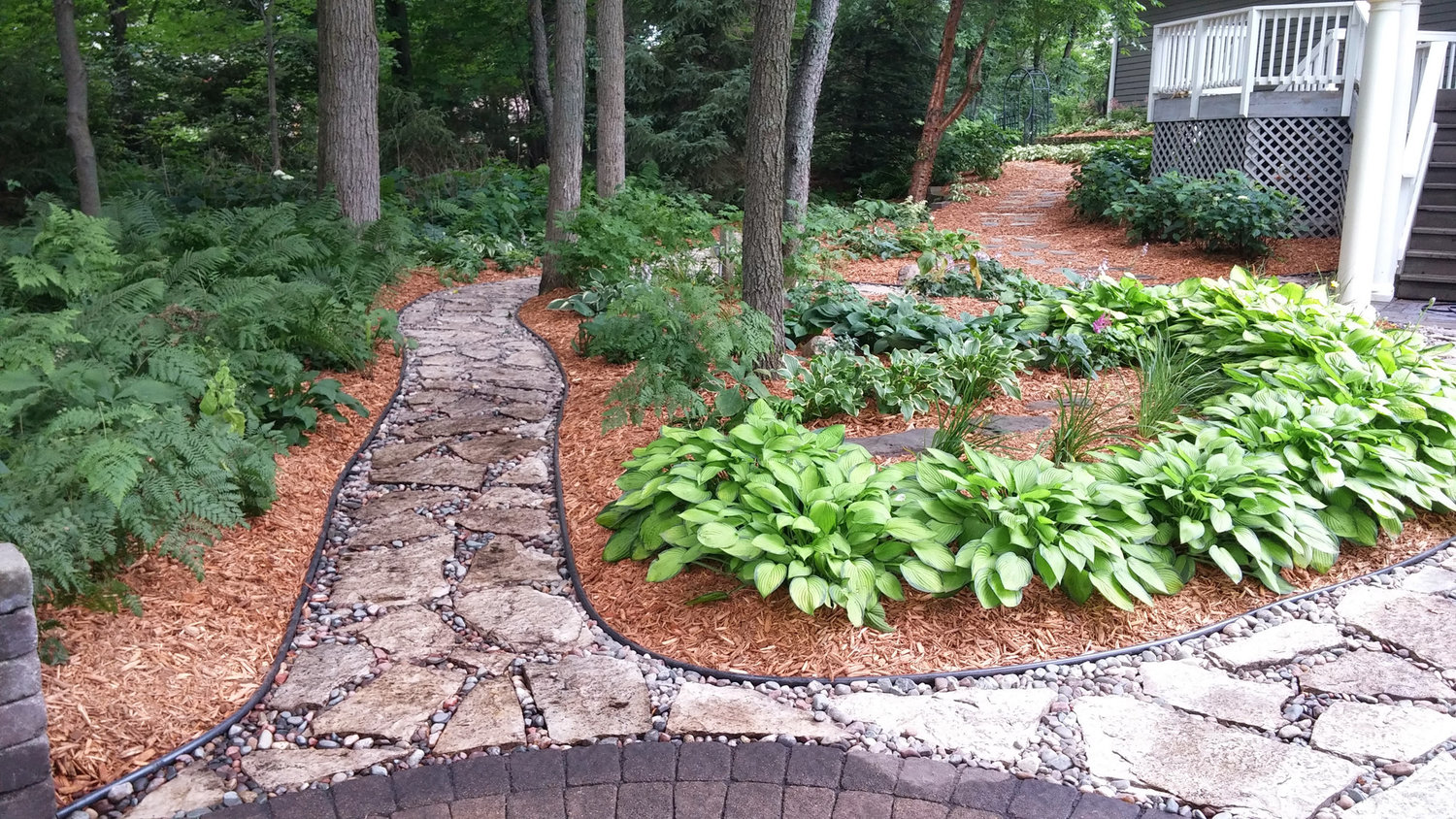
Tree rings and landscape islands look more intentional when outlined with custom concrete borders. These borders help highlight focal points while keeping mulch and soil contained.
Walkways gain visual structure when combined with thoughtful concrete border design. Edging can guide visitors through the landscape and create stronger visual connections between outdoor spaces.
Patios, fire pits, and seating zones often benefit from decorative borders that define gathering spaces and create seamless transitions into surrounding landscaping.
Driveways are another excellent spot for edging. Borders help protect adjacent planting beds and prevent turf from creeping into hardscape areas.
Pool decks and entertainment areas often look more cohesive when decorative concrete curbing ties together multiple landscape elements.
Popular uses for backyard edging ideas include around fire pits, outdoor seating areas, and patio to landscape bed transitions. Keep in mind straight lines usually work best in formal and modern gardens. Curved concrete edging looks nice around cottage gardens, natural gardens, and curved flower beds.
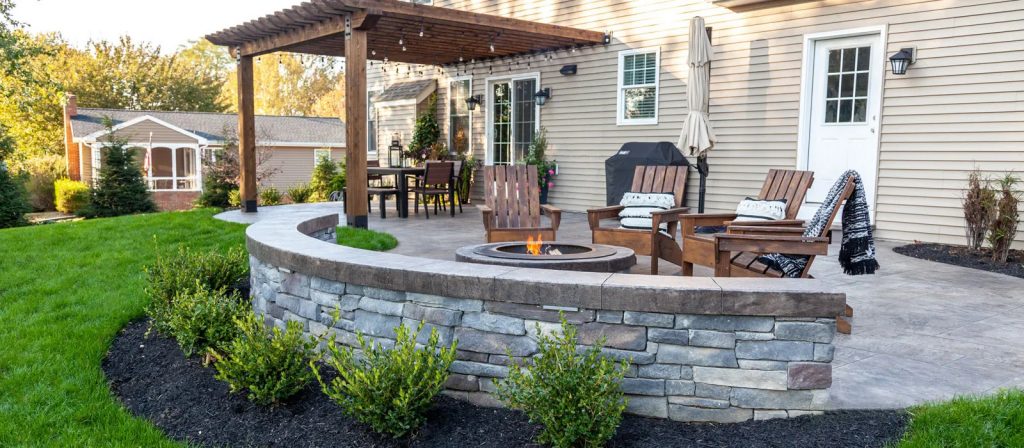
“Concrete” doesn’t have to mean boring or basic. Poured concrete edging is customizable in almost any way you can imagine.
Concrete comes in both smooth and textured finishes. If you want your edging to stand out, try stamped concrete edging. This type of concrete can be customized with unique details to resemble stone or brick without losing any durability.
Speaking of stones and bricks, don’t be afraid to use color to help your borders blend in or stand out from surrounding features. Using integral color in your concrete edging ideas can help it match up with mulch, pavers, nearby lawn areas, and even your home’s exterior. Darker borders can contrast well with light-colored mulch, while earth-tone concrete may complement your brick home and natural stone hardscaping.
You can even coordinate border colors with patios, walkways, and pool decks near your landscaping for a connected, built-together look. If you’re searching for concrete edging ideas, try mixing and matching a slight color tint, stamped details, and curved borders.
For inspiration, homeowners can explore our guides on Decorative Concrete Walkways, Decorative Concrete Trends, and How to Choose a Decorative Concrete Finish.
While each of these may seem like minor things, they can really help to polish up the appearance of your home and make your landscaping look more tailored to your property.
Prices for installing concrete borders vary by project size. For instance, concrete border installation around a single flower bed requires much less work than a full border installation project.
Some of the main factors that determine price include:
| Project factor | Lower complexity | Higher complexity |
| Layout | Straight lines | Multiple curves and transitions |
| Yard prep | Flat, stable soil | Sloped ground or drainage issues |
| Finish | Plain texture | Decorative color or stamped detail |
| Scope | Single bed edge | Whole-yard border system |
Minnesota weather isn’t always kind to outdoor surfaces. Freeze/thaw cycles, springtime soil heave, fluctuating moisture levels, and extreme temperature changes from season to season wreak havoc on landscape elements. For this reason, installation is key.
Good site preparation and attention to drainage will allow concrete to better withstand freeze/thaw cycles and minimize cracking. If water pools against your edging from poor drainage, it will add to soil movement issues over time.
Maintenance needs are fairly minimal once installed. Occasional cleaning and periodic sealing is typically all that’s needed to keep your decorative concrete looking its best and your decorative finish protected. Read our article How to Maintain Decorative Concrete for more tips.
As with any product, installation is just as important as the material you choose. Not every decorative concrete contractor is familiar with the basics of landscape construction. At Tracer Pool & Landscape, our design build process allows us to work with you to solve grading, drainage, and beauty with function when it comes to landscape edging.

Low maintenance edge projects might be easy enough to do yourself, but sometimes it’s better to hire a pro. Consider these scenarios before tackling edge installation:
Contractors can ensure crisp lines, correct slope, uniform sizes, and lasting results.
If you’re considering a larger outdoor transformation, our design-build services and landscaping services can help create a cohesive plan that incorporates edging, hardscaping, and planting design.
Ready to get started? Visit our Contact Page to discuss your project. You may also find this Pavers vs. Concrete resource helpful.
In landscaping, edging can change the entire look and functionality of your outdoor space. From enhancing curb appeal to making maintenance simpler, well-designed borders add definition and structure to your landscape.
No matter what you’re edging, decorative concrete edging is an investment that pays dividends. It’s the perfect touch that doubles as a functional upgrade, allowing your yard to stay looking manicured, purposeful, and low maintenance for years.
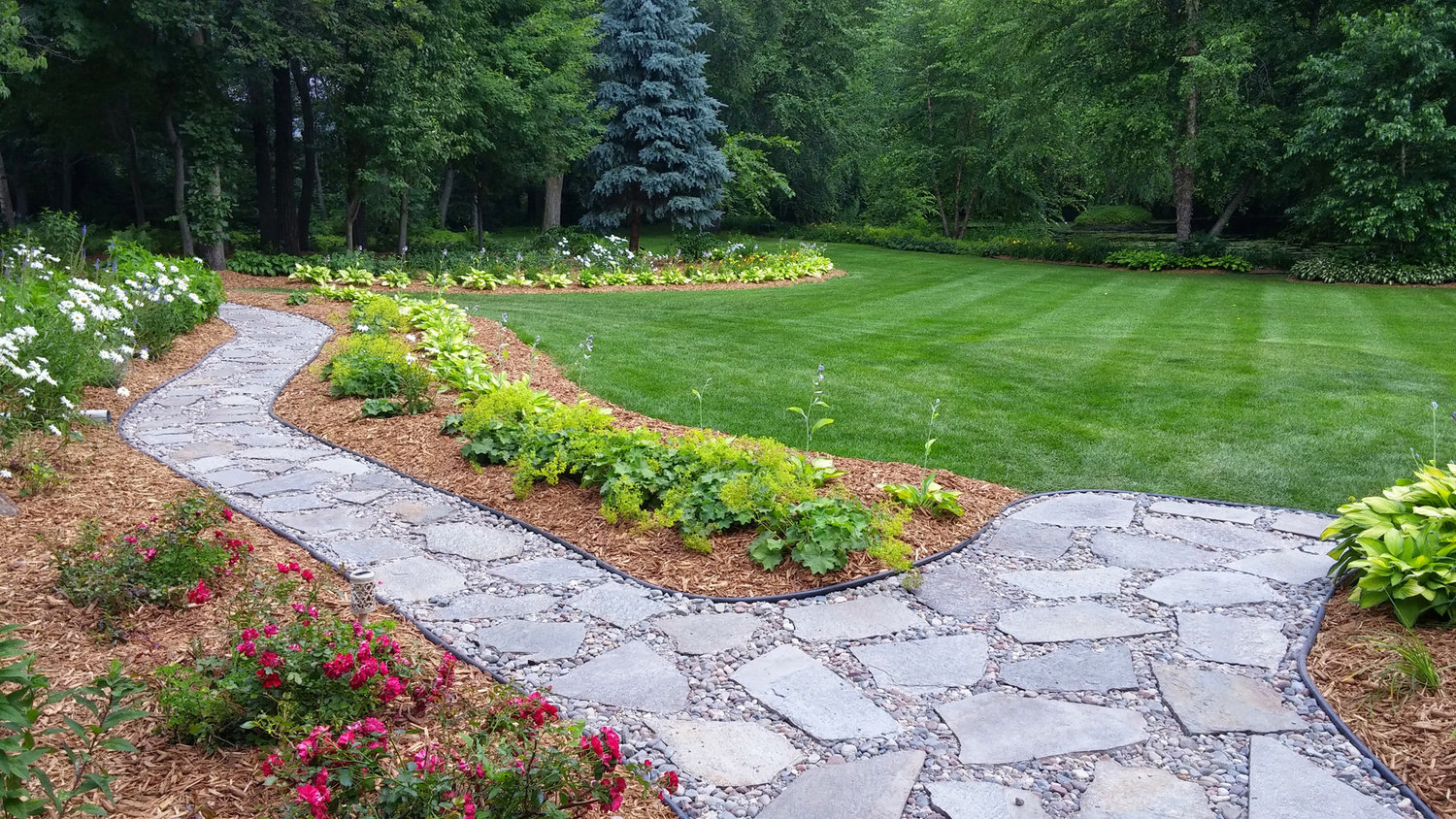
Decorative concrete edging is a permanent concrete border used to separate lawns, planting beds, patios, walkways, and other landscape features.
Properly installed concrete landscape edging can last for decades with minimal maintenance.
Concrete is generally more durable, customizable, and longer lasting than plastic or metal alternatives.
Yes. Curved concrete edging is one of the most popular options because it can follow natural planting bed shapes and custom landscape layouts.
When properly installed with adequate drainage and site preparation, concrete performs well in cold climates and can withstand freeze-thaw conditions.
Most installations require only occasional cleaning and periodic sealing.
Yes. Through color, texture, and stamped concrete edging, borders can often be matched to nearby hardscape features.
Absolutely. Even small yards can benefit from improved organization, curb appeal, and easier maintenance through decorative concrete edging.