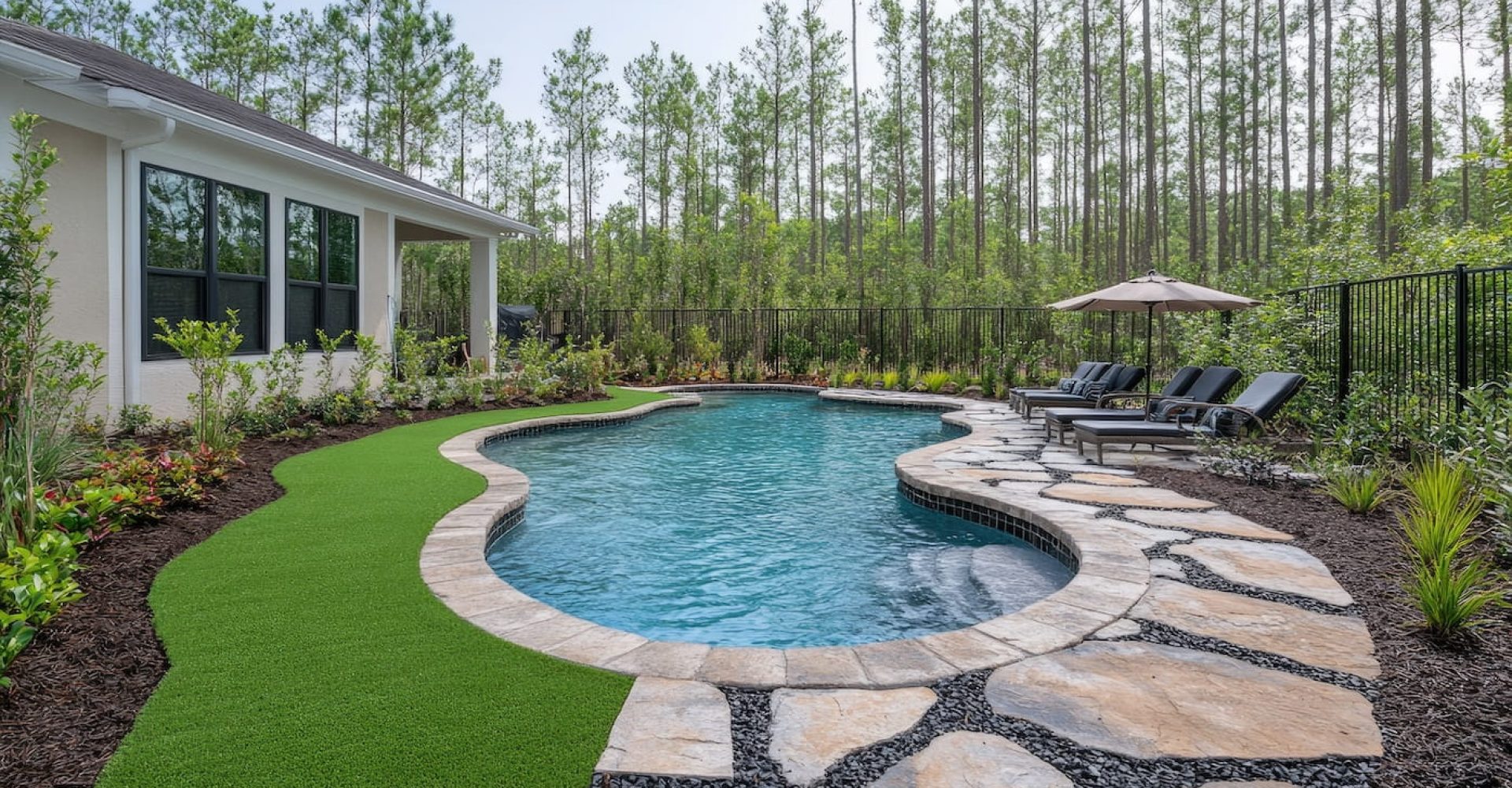
Your dream backyard pool project can easily turn into chaos if landscaping and hardscaping aren’t planned correctly. After investing in a pool installation, homeowners often find they have a space that is too hot, too exposed, or too difficult to maintain during peak temperatures. The lesson here: there’s more to building a successful backyard pool design than the pool itself. Shade, surface comfort, planting, traffic patterns, drainage, and circulation all impact how your entire yard performs during the hottest weeks of summer.
Designing the area around your pool is one of the best ways to ensure you can truly enjoy your investment without spending every weekend cleaning, and in this article, we’ll explain how.
Your pool area can go from comfortable to unpleasant during hot weather when other elements of the landscape were never designed for year-round use.
These complaints are common among pool owners:
Some of the most successful pool and patio design projects take landscaping, patio surfaces, architecture, grading, and drainage into account.
Customers who work with Tracer Pool & Landscape pool installation services can discover how professional design and construction make a difference in outdoor living spaces that hold up for years.
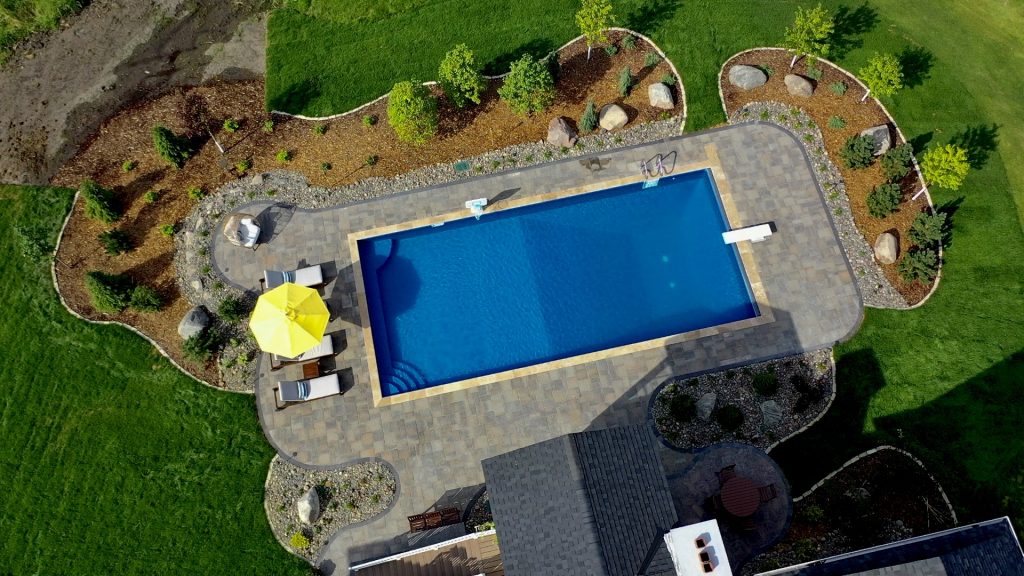
It’s much easier to plan your backyard layout around your lifestyle, family activities, and the features you love using all summer long. For instance, some homeowners prioritize swimming, entertaining, or relaxing, but all benefit from a layout designed around how the space is actually used. Meanwhile, some homeowners are incorporating outdoor kitchens, dining areas, fire pits, and outdoor entertainment features into their outdoor living design.
Outdoor entertaining spaces and patio additions should work well for activities like:
With Tracer Pool & Landscape’s design-build services, projects always start by learning more about how homeowners want to live and spend time outdoors. Good design comes back to improving your day-to-day life while in your own backyard.
That’s one reason backyard pool landscaping projects require careful planning. Everything must work together to support how you live.
When homeowners pick out patio furniture first, it’s often too late to make major changes that provide much-needed shade. Planning shade around pool areas before purchasing seating or accessories helps create a more comfortable environment. Consider these:
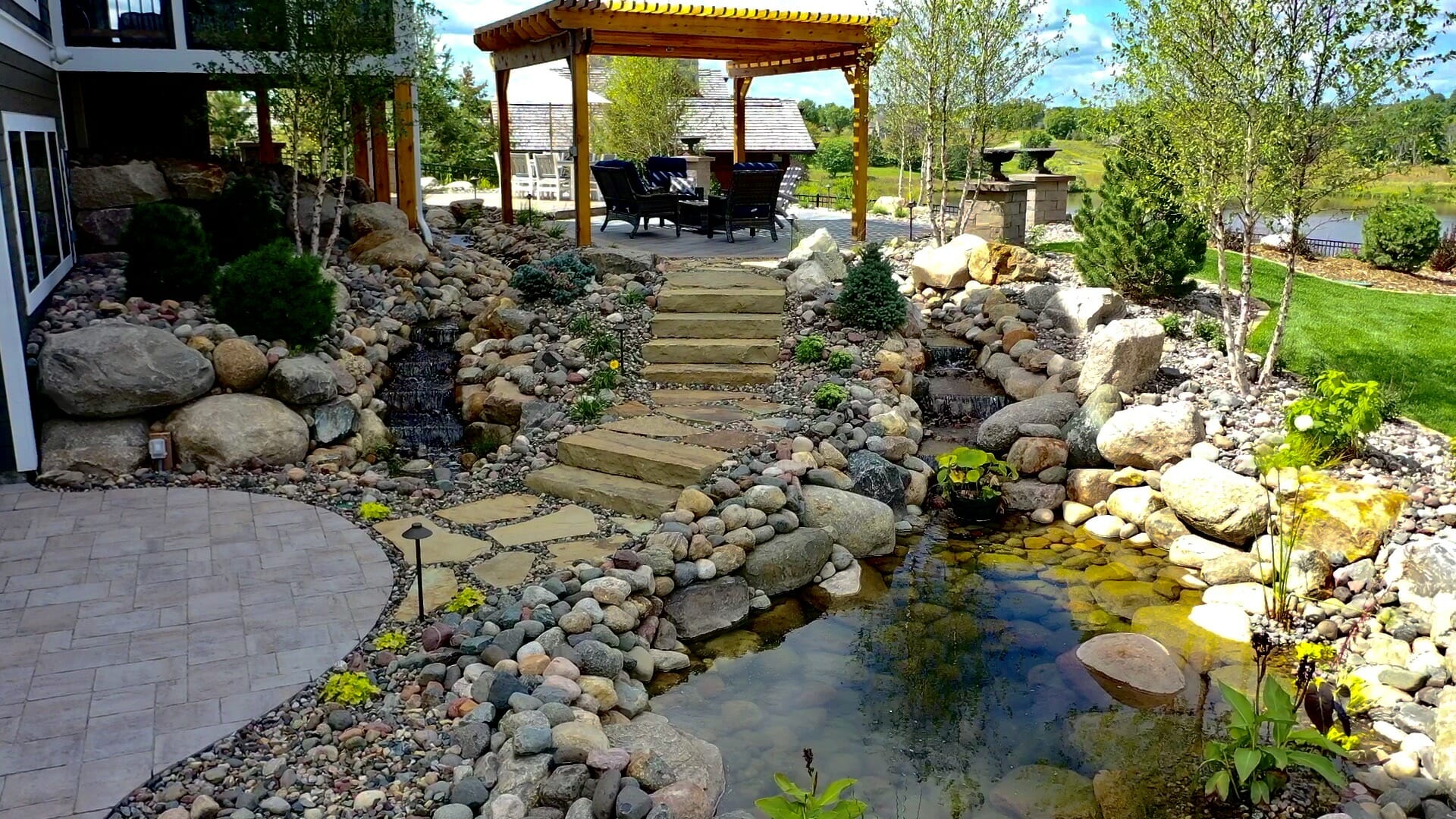
Landscaping can have a huge impact on comfort levels around your pool. However, choosing the wrong plants may lead to additional maintenance. Smart poolside landscaping should reduce cleanup while improving comfort. Here are some tips:
Homeowners considering pool landscaping ideas can work with Tracer Pool & Landscape’s landscaping design services for help planning patios, retaining walls, pergolas, planting plans, and phased outdoor projects.
Thoughtful planting also supports low maintenance pool landscaping by minimizing cleanup throughout the season.
Bare feet have a lot to say about your deck surface. Dark materials that absorb heat can become uncomfortable during peak summer temperatures.
The best pool deck materials are:
A well-planned pool patio design also creates smooth transitions between your pool deck and surrounding gathering spaces.
A decorative concrete pool deck offers both durability and visual appeal.
Homeowners can explore options through Tracer’s decorative concrete services, which include pool decks, patios, walkways, driveways, stamped concrete, and exposed aggregate surfaces. Decorative concrete options available include:
One of the best backyard pool ideas is dividing the space into functional zones. Here’s where to start:
Thoughtful zoning makes your backyard easier to use while supporting a more functional outdoor living space.

Drainage is one of the most overlooked parts of backyard pool landscaping, but it directly affects comfort, safety, and maintenance.
Without proper drainage, homeowners may experience:
Proper grading and drainage help protect patios, walkways, and landscaping investments.
| Design choice | Best for | Watch out for |
| Pergola near pool | Shade and structure | Placement matters |
| Large shade trees | Cooling and privacy | Leaf drop near pool |
| Decorative concrete deck | Durable finished surface | Finish and texture matter |
| Lounge zone | Comfort and entertaining | Needs shade nearby |
| Retaining wall | Sloped yards | Should fit drainage plan |
| Pool house | Storage, shade, changing space | Needs thoughtful placement |
| Outdoor lighting | Evening use | Avoid glare near water |
There’s far more that goes into creating a comfortable pool patio than simply surrounding the pool with concrete. Materials, shade, drainage, circulation, and planting all influence how the space performs.
When comparing pool deck ideas or evaluating different layouts, homeowners should think about how each decision affects the overall functionality of the backyard.
Many homeowners underestimate how connected pool projects really are. Landscaping, grading, hardscaping, planting, structures, and traffic flow all affect one another.
That’s why many homeowners choose professional Minneapolis pool design and design-build services instead of managing multiple contractors independently.
Tracer Pool & Landscape’s design-build process combines hardscaping, softscaping, outdoor structures, grading, and circulation planning under one roof. This integrated approach helps create a cooler, cleaner, and more comfortable backyard pool design that requires less maintenance over time.

The best backyard pool design reduces heat, improves comfort, and minimizes maintenance by combining shade, planting, surface materials, and drainage into one cohesive plan. When each element of the yard works together, homeowners spend less time cleaning and more time actually enjoying their outdoor space.
Ultimately, a successful backyard pool design turns a hot, high-maintenance yard into a comfortable retreat that supports how you actually live all summer long.
Strategically placed shade structures, lighter patio surfaces, and heat-tolerant landscaping can help cool down pool areas significantly.
Read More: How to Add a Waterfall to Your Pool: Design Tips, Costs & Styles
Low-litter, heat-tolerant plants work best around pools because they reduce cleanup and handle reflected sunlight. Ornamental grasses, hardy shrubs, and native plants are all strong choices for poolside landscaping because they stay attractive without dropping excessive debris into the water.
Avoid plants that regularly drop leaves, flowers, or fruit into the water. Heavy-shedding trees should also be planted farther away.
Read More: Gardening with Perennials: Low Maintenance Plants for Lasting Beauty
Many homeowners choose decorative concrete because it is durable, customizable, and available in a wide range of finishes.
Read More: Pavers vs Concrete: What Lasts, What Shifts, and What to Fix in Spring
Most successful pool layouts use a mix of sun and shade rather than full coverage. Swimming zones typically remain open and sunny, while lounge areas, dining spaces, and seating zones should include consistent shade to improve comfort and reduce heat exposure in the overall outdoor living space.
Use durable materials, low-mess plants, proper drainage, and layouts that minimize ongoing cleanup.
Read More: Creating a Low-Maintenance Backyard Oasis
Without proper drainage, water can collect around patios, decks, landscaping, and foundations, creating maintenance and safety issues.
Yes. Design-build services help coordinate landscaping, grading, drainage, patios, and structures into one cohesive outdoor plan.