Learning how to test for pool water is one of the simplest ways to keep a pool clean, safe, and easier to maintain all season. Clear water is not always balanced water, which is why homeowners need to check chlorine, pH, alkalinity, calcium hardness, and stabilizer levels regularly.
This guide explains:
Pool water testing should be done regularly since looking at your water and not seeing an issue doesn’t mean that there isn’t one. Pool water should be tested regularly because clear water can still be chemically unbalanced, unsafe, or harder on swimmers and pool equipment. Keeping your pool water stable means you are keeping it healthy. Testing helps you do that.
The only way to know the chemical balance of your pool is to know how to test pool water. Doing the testing as a part of your regular maintenance routine means you can stay on top of any small imbalances. Routine testing helps prevent algae growth, cloudy water, corrosion, scale build up, and poor sanitizer performance. All of these issues can lead to even bigger issues, so regular testing keeps your pool running at optimal condition, which means you can enjoy it for years to come.
When testing your pool water there are some core categories you are monitoring. These include:
Let’s take these categories one at a time and look at what safe pool chemical levels you should aim for.
The chlorine test for pool water is monitoring three things:
The Free Chlorine (FC) or active sanitizer
The Combined Chlorine (CC) or chloramines or used up chlorine
Total Chlorine (TC) or the sum of both free and combined
Monitoring these three chlorine levels shows how bacteria-free your pool is and therefore how safe it is to swim in.
The ideal range for Free Chlorine is 1-3 ppm (parts per million) while Combined Chlorine is below 0.5 ppm.
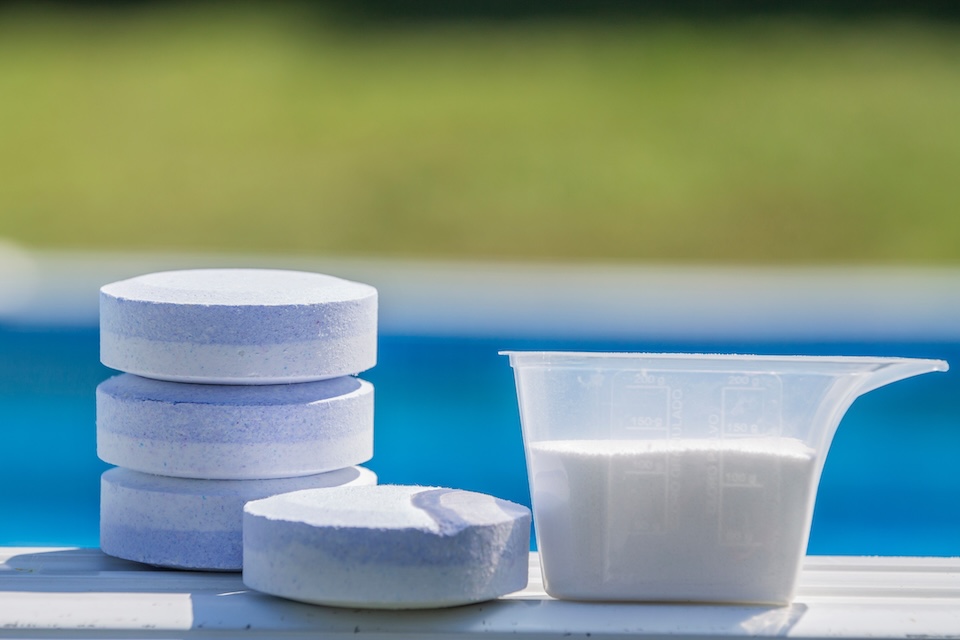
cleaning and maintenance of swimming pools with chlorine tablets
Testing pH levels in your pool monitors the acidity or basicity/alkalinity of your water. Proper pH levels support both swimmer comfort and sanitation as it influences chlorine effectiveness. The pH scale ranges from 0-14, with lower numbers indicating higher acidity and higher numbers indicating higher basicity or alkaline levels.
The ideal range for pH is in the middle from 7.2 to 7.6 for the chlorine to remain active at killing bacteria.
This test is done alongside the pH test because alkaline levels will act as a buffer to stabilize the pH levels in your pool water. Alkalinity will help prevent a rapid shift or erratic jump in pH and your water’s ability to keep acid levels lower.
The ideal range for alkalinity is 120 ppm.
The calcium hardness (CH) test monitors the concentration of calcium carbonate that is dissolved in your pool water. Balancing the CH means that your pool water is not too hard or too soft, but hits the “goldilocks” level of balanced CH levels.
The ideal range for calcium hardness is 200-400 ppm.
This test measures the cyanuric acid (CYA) which acts as a pool stabilizer or sometimes referred to as the “sunscreen” for the chlorine in your pool water. It acts to protect the active chlorine from being destroyed by sunlight exposure. Since your water will, of course, get exposed to the sun in an outdoor pool, monitoring CYA is important.
The ideal range for cyanuric acid is 30-50 ppm.
| What to Test For | What Safe Range to Aim For |
| Chlorine level | Free Chlorine = 1-3 ppm
Combined Chlorine = below .5 |
| pH level | 7.2 to 7.6 |
| Total alkalinity | 120 ppm |
| Calcium hardness | 200-400 ppm |
| Cyanuric acid | 30-50 ppm |
Safe pool chemical levels for each of the categories means, first and foremost, that your pool is safe for swimmers, which is the point of having it in the first place. Keeping the chemical levels in your pool safe also means that they will not harm your pool surfaces or equipment, which can derail the fun in your backyard pool easily enough.
So, what happens when each chemical reading is too high or too low? Let’s take a look.
When your pool has a low chlorine level it reduces sanitation and your pool water becomes less safe for swimmers and can cause illness. The unsanitary conditions promote the growth of algae and bacteria, such as E. coli and provide conditions that help viruses thrive.
On the other hand, when your chlorine levels are high the chemical can irritate swimmers, especially their skin, eyes, and sometimes their respiratory system, especially if it is already compromised.
Low pH levels in your pool water means your water is acidic instead of neutral, which can damage both your pool surfaces and your equipment. This damage can be costly to repair, so keeping your levels even is important.
A high calcium hardness in your pool water can break down the finish on your pool surface and lead to scaling, which can also be costly to repair and decrease your pool’s longevity.
Low calcium hardness, however, makes your water “soft,” which can promote corrosion as it strips calcium from surfaces such as tile grout or concrete.

Knowing how to test your pool water correctly takes the guesswork out of knowing that your pool water is balanced and safe.
Correctly sampling and testing your pool water includes:
Collect your pool sample for testing from the deeper end of your pool away from any return jets, skimmers, or structural corners. You should also collect water about 12 to 18 inches below the surface. This will ensure that your sample most accurately represents your pool water environment.
The best time to collect your pool water sample is in the mid-morning after the water has been circulating overnight and the sun has not yet heated the pool where it can affect chemical levels. This will give you the most stable reading. This should be done 2 to 3 times a week during the summer. You should also wait at least 24 hours after chemicals have been added to give them time to circulate to avoid misleading results.
There are three main methods for testing your pool water, and which method you choose to use depends on how hands-on you want this part of your pool maintenance to be and also how accurate you need the reading to be. Figuring out the best way to test your pool water means figuring out what pool test kit fits your maintenance routine.
This method is the simplest and quickest way to perform a daily test for pool water. The accuracy of the test and its readability are not as reliable as other methods. They are best as an affordable method for quick, routine checking.
This method is more precise than test strips and uses reagent drops in sample water to detect chlorine, pH and alkalinity. They are an accurate and affordable method for weekly maintenance.
This method can provide a convenient, accurate, and precise readout of chemical levels in your pool water, but is the most expensive option available. They also can require recalibration regularly to maintain their accuracy.
Most pool owners should test chlorine and pH levels at least two to three times a week during the swimming season. You should then wrap in broader chemistry checks into your pool maintenance routine on a weekly basis or as conditions change.
Extra testing matters most after storms, heavy swimming activity, and heat waves because they can change the chemistry makeup of your pool water. You should also test daily right after opening your pool for the season and you are looking to establish balanced levels. You should also test extra before closing your pool for the winter.
What Common Pool Water Problems Can Testing Catch Early?
If you are, then regular testing can help you identify the underlying issue that is causing these common complaints that are often caused by a chemical imbalance. Testing shows you what the balance issue is and by fixing it you can solve the underlying issue before it becomes an expensive or frustrating fix.
Pool chemistry testing should be a part of your bigger pool care routine. Testing works best when it is done alongside circulation and filter care, skimming and vacuuming, and seasonal adjustments. Pool testing is a part of your complete pool maintenance throughout the swimming season and will help you enjoy that season all the more.
In the shorter northern pool season regular testing matters because problems can escalate quickly once the water warms up and usage increases. You do not want to be dealing with the issues caused by imbalanced pool water when you want to be enjoying the few months you have to use your pool to its fullest.
During the spring opening, after your pool has been dormant throughout the winter, you will want to test every day for the first week and then twice a week until the season gets into full swing.
Minnesota has no shortage of summer storms that can wreak havoc on your pool chemistry, so after any heavy storm, make sure to test your water and make the adjustments necessary as soon as you can.
At the height of summer, your pool can get heavy use, which is the main reason you installed it in the first place. So, during that heavy use time, test your water three times a week to keep it balanced and in optimal condition.
At the end of the pool season, make sure to test your water as a part of your preparation routine for closing your pool for the winter.
Creating a simple weekly routine that incorporates pool testing into your maintenance plan can help make this important task manageable throughout the pool season.
Make pool testing a part of your weekly pool maintenance routine by:

Consistent pool water testing is one of the simplest pool maintenance habits that helps protect not only swimmer health and comfort, but also your pool surfaces and equipment. It also helps improve your water clarity, making your pool inviting and pleasant. Once you make testing pool water a regular and consistent habit, it can save you time, money, and stress in the long run.
You test pool water by using strips, a liquid kit, or a digital tester to measure the key chemistry levels.
Most pools should be tested at least two to three times a week during active use.
Pool water should be tested for chlorine, pH, alkalinity, calcium hardness, and cyanuric acid.
They are useful for quick checks, though liquid kits are often more precise.
Yes, water can look clean while still having unsafe or damaging chemical levels.
Most pool water should stay in the range of about 7.2 to 7.8.
A strong chlorine smell often points to water imbalance or chloramine buildup, not simply too much clean chlorine.
Pool water should be tested more often after storms, heavy use, very hot weather, and chemical adjustments.
The simplest way to keep a pool clean, safe, and free of cloudy water, algae, or irritants that can cause swimmers discomfort is to know how to test for pool water. Knowing what to test and how often, which tools to use and what the numbers mean makes it so you can respond to any issues quickly before they grow into something more problematic. By making testing your pool water a part of your maintenance routine, you can keep your pool safe all season long so you can enjoy it the way it is meant to be enjoyed.