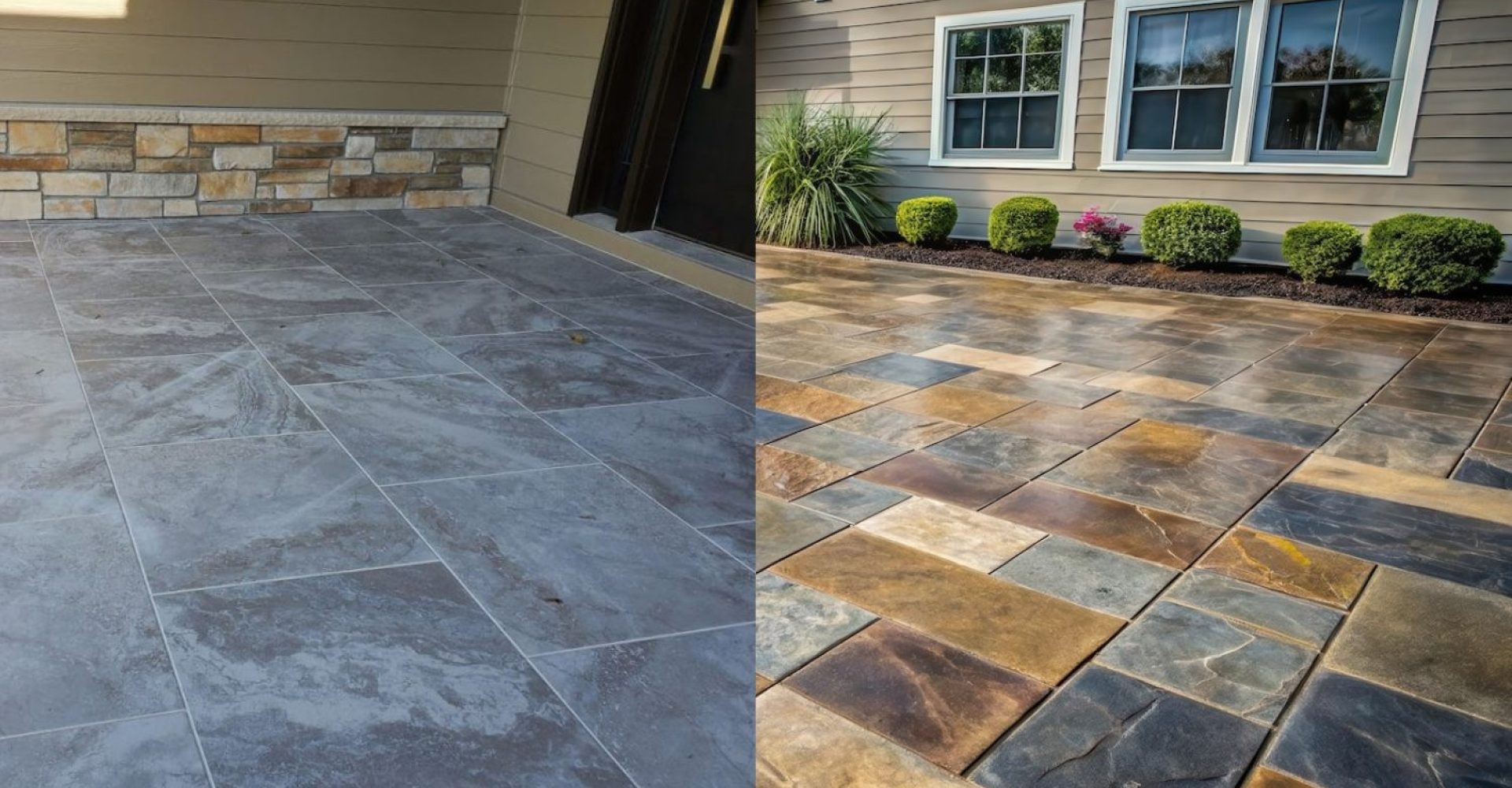
Outdoor living spaces are a homeowner’s oasis, especially in a climate that experiences long, cold winters, because when the weather turns warm, outside is where you want to be. One of the main elements of creating this oasis is your patio surface, which is basically the foundation for your space. Choosing the right material for your dream patio means making some choices on what materials will best serve your purposes, both functionally and aesthetically. When it comes to backyard patio options, one of the most common decisions is between a stamped concrete patio and patio pavers.
Both of these materials offer beauty and durability, but in a patio materials comparison, they do differ in appearance, cost, upkeep, and performance. Let’s break down the pros and cons of a patio constructed from stamped concrete vs. pavers, so you can make a confident decision about the best material based on your budget, design, climate, and lifestyle.
The first step in comparing stamped concrete vs pavers is to define each material.
Stamped concrete is a poured concrete that is pressed with large rubber mats while it is still wet. Once the concrete is dried and the pattern and texture are permanent, colored stains or sealants are applied, which add another dimension to the overall design. The process creates a textured and colored appearance on the concrete surface that mimics more high-end and costly materials, such as brick, stone, slate, or even wood. In this way, a stamped concrete patio offers you the decorative look of natural stone without the high cost or complex installation.
Stamped concrete lends itself to both durability and flexible design options, since it has the strength and durability of concrete but can look like many other different materials. Stamped concrete, if properly installed and maintained, can last between 25 to 30 years. It also has fewer seams than pavers, offering a more elegant finish. This combination of high-end elegance with low-cost installation, durability, and flexible design makes it a popular patio material for homeowners.
Pavers are individual pieces of concrete, brick, stone, or composite materials that are laid in a pattern over a compacted gravel and sand base to create a durable patio surface. Pavers offer versatility with modular design potential and are often popular with homeowners for both DIY projects and high-end custom patios that are professionally installed.
Pavers come in a variety of different materials that allow you to choose a texture, shape, and color that fits your style and offers a lot of variety for a customized design. Pavers are a highly durable option that can last up to 50 years if properly installed and maintained.
Both stamped concrete and pavers are patio options that offer aesthetic appeal, but with a different overall visual vibe. When choosing between the two you want to consider your own personal style so the design fits the look you are after. Remember that your outdoor patio is an extension of your home and the look and feel of the design should support the style of your home too.
The seamless, textured look of stamped concrete presents an elegance that can mimic the look of high-end stone. The color and texture can be customized for a unique design that can closely fit your personal style. However, it can create a slippery surface when wet and is not ideal for pools and or walkways with heavy traffic.
Pavers are a more classic patio option that can be installed in a wide variety of patterns, textures, and colors depending on the paver material you choose. Brick will give you a very different look than either stone, composite, or concrete. But even brick comes in many different shapes, colors, and textures. Your choice of paver material will ultimately dictate the look and feel of your patio and can have a strong architectural character. Pavers are also a slip resistant patio option that make them a good choice for pool decks and walkways.
The professional team at Tracer Pool and Landscape can help you match your choice of patio material with your existing landscaping, decking, or pool area.
In colder climates, like that in Minnesota and the Upper Midwest, the freeze-thaw cycle can challenge the durability of landscape materials.
Pavers, overall, are more resistant to harsher climates since they are more flexible and can shift along with the ground through the freeze-thaw cycle. Pavers can also be individually replaced if one becomes cracked, making it easier to repair damaged areas.
Stamped concrete, however, is poured as one continuous slab and does not have the flexibility of pavers and can crack more easily in harsher climates. It requires sealing to resist damage and cracking and is much more difficult to replace.

When comparing the installation of stamped concrete vs. pavers, it is important to note that stamped concrete is quicker to install but requires curing time before your patio can be used. This needs to be considered when planning your installation timeline.
Pavers, on the other hand, take longer to place than poured concrete, but do not require any curing and can be used right away.
As with most home improvement projects, planning ahead is key to a smooth process. Consider scheduling your patio installation around spring or early summer for the best results.
Maintenance and long-term care contributes to your patio’s durability and cost.
Maintenance for stamped concrete includes steps to prevent fading and cracking. Sealing is required maintenance every few years to keep it looking fresh and preventing deterioration beyond normal wear and tear. However, as stamped concrete is laid as one continuous slab, weeding and leveling are not required as part of your maintenance routine.
Since pavers are laid individually, weeds can grow between the joints, making occasional weeding a part of your maintenance routine. Pavers are also susceptible to shifting and require periodical leveling to maintain an even surface.
Both patio options offer longevity with the right maintenance plan. As one of the top hardscaping services in MN, Tracer can advise you about the proper care schedule for each material.
A stamped concrete patio will generally cost less per square foot initially, while pavers will have a slightly higher upfront cost per square foot. However, pavers are also generally easier to repair over time. When looking at your cost breakdown, make sure to also consider the cost of edging, labor, and prep work, which can vary according to your location and also the specifics and size of your outdoor space. Do your research to also find ideas for designing your concrete patio on a budget. In the end, contacting a professional landscaper will help you get the most out of your budget and make the right decision for you.
Stamped concrete will give you:
Pavers will give you:
In the end, the patio material you choose will depend on your personal preferences in both aesthetics and lifestyle. Your budget, of course, will also play a role.
Contacting the Tracer Pool and Landscape design team for personalized advice and cost breakdown can help you make the right decision.

No matter which option you choose, the key to a great patio is expert custom patio installation, proper base prep, and a design that fits your space. Both a stamped concrete patio and a paver patio can completely transform your backyard into the outdoor oasis of your dreams. The important thing is to pick the right material for you lifestyle and hire a professional to help you make the dream come true.
A stamped concrete patio is made from poured concrete that is stamped and colored in the installation process to mimic other types of materials.
Stamped concrete can offer an elegant, high-end look without the cost, while pavers offer a more classic look with versatile design options.
Pavers are more durable in the freeze-thaw cycle experienced in harsher climates.
Stamped concrete requires resealing every few years to maintain its appearance. Pavers require occasional weeding and periodic leveling.
Although stamped concrete is initially less expensive to install than pavers, it is more expensive to maintain, making pavers more cost-effective in the long-term.
Pavers will shift or settle over time and will require leveling and sometimes individual pavers need to be replaced if damaged.
Stamped concrete can crack or fade and require resealing to prevent this type of damage.
A stamped concrete patio can be installed in about three days, but it takes another 28 days for the patio to fully cure and be usable. Pavers, on average, take between 4 to 7 days to install, but the duration depends on the size of your patio and the complexities of the design.
Because stamped concrete can mimic other materials, such as brick, stone, or even wood, the design options are plentiful. You can have a flagstone patio or a wooden-planked one, or the elegance achieved with multi-colored staining. Overall, a high-end look can be achieved for a much lower cost than the materials that are mimicked.
Paver patios last longer than stamped concrete patios and are less expensive to maintain, giving them a high return on investment. This usually contributes to pavers increasing your home’s value more than stamped concrete.